Azelex (Azelaic Acid) – Patient Information Sheet
Basic Product Information
- International Nonproprietary Name (INN): Azelaic Acid
- Australia Brand Names: Azelex, Finacea, Skinoren
- Anatomical Therapeutic Chemical (ATC) Code: D10AX03
- Available Forms & Strengths: Cream (20%), Gel (15%)
- Manufacturers: Leo Pharma, Bayer Australia, Ego Pharmaceuticals
- Prescription Status: Pharmacy Medicine (Schedule 2) and Prescription Only (Schedule 4) for selected brands and strengths
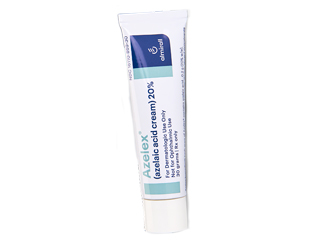
Azelaic acid, marketed under brands such as Azelex, Finacea, and Skinoren in Australia, is a topical medication primarily prescribed for acne and rosacea. It is available in cream and gel forms of varying concentrations, designed for external skin use.
Mechanism of Action
- For Patients: Azelaic acid works by targeting the bacteria that contribute to acne, reducing inflammation, and helping prevent blocked pores. It also promotes the shedding of dead skin cells, helping to keep skin clear and smooth.
- For Healthcare Professionals: Azelaic acid exhibits antimicrobial activity (notably against Propionibacterium acnes and Staphylococcus epidermidis), anti-inflammatory properties, and normalises keratinisation. It inhibits mitochondrial oxidoreductases and 5-α-reductase and reduces production of reactive oxygen species in neutrophils. It is also a competitive inhibitor of tyrosinase, making it useful in some forms of hyperpigmentation.
Pharmacokinetics
- Absorption: Percutaneous absorption is typically low (<5–8% for skin application). Broken or inflamed skin may increase systemic absorption.
- Metabolism: Azelaic acid is chiefly metabolised by beta-oxidation to shorter-chain dicarboxylic acids, similar to the metabolism of fatty acids in the skin and liver.
- Elimination: Primarily via urine (as metabolites and unaltered parent compound); minor elimination in faeces.
- Duration of Action: Topical effects last several hours. Clinical improvements are evident after 4–8 weeks of regular use.
Use in Everyday Life and Best Practices
- Typical Doses: Apply a thin layer to affected areas twice daily (morning and evening). In sensitive skin, start with once daily, increasing as tolerated.
- How to Use:
- Cleanse the area with a gentle, non-comedogenic cleanser and pat dry.
- Apply a small amount of cream/gel evenly and gently rub into the skin.
- Wash hands after application.
- English Context: Use specially formulated sunscreens (SPF 30+) to prevent pigmentation. Weather in Australia, with intense sun, requires consistent sun protection while on azelaic acid.
- Consider non-comedogenic moisturisers if skin becomes dry or irritated.
Dosing in the Morning vs Evening
- Morning Application: Protects skin throughout the day; must use sunscreen, as azelaic acid may increase photosensitivity.
- Evening Application: Allows for overnight absorption and reduced risk of interaction with other skincare or exposure to sunlight.
- Tip: For best results, apply at similar times daily. Split application (morning & night) is standard unless otherwise directed.
Taking with Food or on an Empty Stomach
- Azelaic acid is for topical (external) use only. Meals do not affect its efficacy or absorption.
- In the Australian diet or lifestyle, no restrictions are needed — however, always wash your face before application, typically not immediately after a main meal to avoid residue affecting absorption.
Interaction Warnings
| Substance or Product | Interaction | Recommendation |
| Alcohol-based facial products | May increase stinging or irritation | Avoid concurrent use |
| Other acne treatments (e.g., benzoyl peroxide, tretinoin) | Potential additive irritation | Stagger application (e.g., use one in AM, one in PM) |
| Medicated cosmetics | May reduce skin tolerance | Consult pharmacist or GP |
| Systemic medications | No significant systemic interactions (due to low absorption) | Safe for most comorbidities |
| Alcohol (ingested) | No direct interaction | Safe in recommended quantities |
Indications
| Indication | Status | Notes |
| Acne vulgaris | Approved | First/second-line in mild-to-moderate cases |
| Rosacea (papulopustular subtype) | Approved | 15% gel specifically for rosacea |
| Post-inflammatory hyperpigmentation | Off-label | Used under dermatologist guidance |
| Melasma | Off-label | Used when other treatments unsuitable |
Dosing According to Clinical Indications
| Indication | Population | Dose & Frequency | Duration |
| Acne vulgaris | Adults & adolescents (12+ years) | 20% cream or 15% gel — thin layer twice daily | Minimum 4–8 weeks; continue as indicated |
| Rosacea | Adults | 15% gel — thin layer twice daily | 4–12 weeks or as advised |
| Hyperpigmentation/Melasma (off-label) | Adults | 20% cream, thin layer twice daily | 3–6 months under supervision |
| Children (below 12 years) | Paediatrics | Not routinely recommended; consult specialist | Individual assessment |
Safety Profile and Side Effects
| Adverse Effect | Frequency | Action |
| Skin irritation (redness, stinging, burning) | Common (>1/10) | Reduce frequency/amount, use moisturiser |
| Dryness, peeling, itching | Occasional (1/100–1/10) | Use gentle cleanser/moisturiser |
| Hypopigmentation/hyperpigmentation | Rare | Consult doctor if persistent |
| Allergic reaction (rash, swelling) | Very rare | Discontinue, seek medical attention |
| Sensitivity to sunlight | Infrequent | Apply sunscreen, avoid excessive sun exposure |
Guidelines for Proper Use – Pharmacist & Clinical Advice
- Apply only to the skin surface; avoid eyes, mouth, and mucous membranes.
- Wash hands after each use.
- Discontinue other harsh acne products unless cleared by a healthcare provider.
- Stop use and see a healthcare professional if significant irritation, allergy, or worsening of condition occur.
- If you miss a dose, apply as soon as you remember. If close to the next dose, skip the missed application — do not double up.
- Contact your GP or dermatologist if pregnant or breastfeeding before starting azelaic acid.
- Cream or gel tubes should be stored below 25°C and tightly closed, out of reach of children.
- In Australia’s warm climate, extra care should be taken to avoid prolonged sun exposure and use sun protection consistently.
Alternative Treatment Options
| Medicine/Class | Reimbursed by PBS? | Pros | Cons |
| Benzoyl Peroxide | Yes | Readily available, effective for mild acne | Can be strongly irritating/drying |
| Topical Retinoids (e.g., Adapalene, Tretinoin) | Yes, for specific indications | Effective for comedonal acne; some anti-ageing effects | Sun sensitivity, not for pregnancy, irritation risk |
| Topical/Oral Antibiotics | Yes (restricted) | Useful if bacterial infection significant | Resistance risk, not for long-term monotherapy |
| Oral Isotretinoin | Yes (severe cases only) | For severe, refractory acne | Multiple systemic side effects, strict monitoring |
| Metronidazole (for rosacea) | Yes | Effective for rosacea, gentle | May be less effective for acne |
Legal, Registration, and Reimbursement Status in Australia
- Regulatory Bodies: Registered and monitored by the Therapeutic Goods Administration (TGA) and the Pharmaceutical Benefits Scheme (PBS).
- Legal Status: Some preparations (e.g., 20% cream) available as Pharmacy Medicine, others (e.g., higher-strength gels for rosacea) are Prescription Only.
- Reimbursement: PBS reimburses azelaic acid products for listed dermatological uses (see PBS website).
- Prescription Requirements: Pharmacist will advise which products require prescription and which can be supplied following professional consultation.
Latest Research and Clinical Guidance (2022–2025)
- Recent Australian and international dermatology guidelines (e.g., Dermatology Nurses Association, Australasian College of Dermatologists, 2022–2024 updates) reaffirm azelaic acid as a safe and effective first-line or adjunctive option for mild-to-moderate acne and papulopustular rosacea [1].
- Studies in 2023 (Lancet Dermatology, JAMA) confirm its favourable safety profile during pregnancy (Category B1) and minimal systemic absorption.
- Active study ongoing (AUST-NZ Dermatology Network, 2024): investigation of combination regimens (azelaic acid + low-dose doxycycline) for resistant adult female acne — preliminary results promising.
- Evidence review (Journal of the American Academy of Dermatology, 2023) supports its role in management of pigmentary disorders, especially in Asian and darker skin types.
Availability and Delivery
Azelaic acid creams and gels are widely stocked at community pharmacies, hospital dispensaries, and reputable online pharmacies across Australia. Packaging and price may vary by brand and strength.
| Pack Size | Estimated Price (AUD) | PBS Listing |
| 30g tube | $19–$32 | Yes |
| 50g tube | $28–$49 | Yes |
| City | Average Delivery Time | Same-Day Pick-Up? |
| Sydney, Melbourne, Brisbane, Perth | 1–2 days | Yes (selected pharmacies) |
| Adelaide, Hobart, Darwin, Canberra | 2–3 days | Yes (subject to stock) |
| Regional/Rural | Up to 4 days | Check with local pharmacy |
Frequently Asked Questions (FAQ)
- How long does azelaic acid take to work?
Most patients see some improvement after 4 weeks, but optimal results can take 8–12 weeks depending on the skin condition and consistency of use. - Can I use azelaic acid with other skincare products?
Yes, but avoid using with other potential irritants (like exfoliants or retinoids) at the same time of day unless advised by a healthcare professional. Gentle moisturisers and sun protection are encouraged. - Is azelaic acid safe in pregnancy or breastfeeding?
Yes, it is regarded as safe (TGA Category B1); however, always discuss with your GP or pharmacist first before use during pregnancy or breastfeeding. - What should I do if my skin becomes very irritated?
Reduce application to once a day or every other day and use a gentle moisturiser. If severe irritation persists, stop use and consult your pharmacist or doctor. - Do I need a prescription for azelaic acid?
Some strengths and formulations can be purchased after pharmacist consultation; others need a doctor’s prescription. Your pharmacist can advise on the most suitable option for you.
References:
1. Guidelines for the Management of Acne Vulgaris in Primary Care. Australasian College of Dermatologists Clinical Practice Guidelines Committee (2022–2024 updates).
2. Thiboutot D, et al. "Azelaic Acid: Evidence Reviews and Recommendations." Journal of the American Academy of Dermatology, 2023.
3. "PBS listing and pricing." Pharmaceutical Benefits Scheme (PBS), Australian Government Department of Health, 2024. Available at pbs.gov.au.