Eflornithine: Patient-Friendly Product Information for Australia
Basic Product Information
| International Non-proprietary Name (INN) | Eflornithine |
|---|---|
| Australian Brand Names | Vaniqa®, generic eflornithine |
| Anatomical Therapeutic Chemical (ATC) Code | D11AX16 |
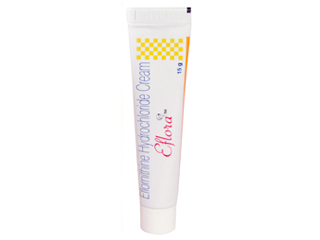
| Available Forms and Strengths | Cream, 13.9% w/w (applied topically) |
| Manufacturers | Galderma, Sandoz, and various generic manufacturers |
| Prescription Status | Prescription Only (Schedule 4 medicine in Australia) |
Mechanism of Action
For patients: Eflornithine works by slowing the growth of unwanted facial hair. When applied to the skin, it affects the hair roots, making new hair grow more slowly and lightly over time.
For health professionals: Eflornithine hydrochloride irreversibly inhibits the enzyme ornithine decarboxylase (ODC) in hair follicles. This enzyme is necessary for cell growth and division in the hair shaft. By inhibiting ODC, eflornithine disrupts putrescine, spermidine, and spermine synthesis, reducing the proliferation of hair matrix cells and consequently suppressing hair growth.
Pharmacokinetics
- Absorption: After topical application, up to 0.8% of the dose may be absorbed into the bloodstream, minimising systemic exposure.
- Metabolism: Eflornithine is not significantly metabolised and remains largely unchanged in the body.
- Elimination: The majority is eliminated via the urine, with a terminal half-life averaging 8 hours in patients with normal kidney function.
- Duration of Action: Continuous use is necessary to maintain reduced hair growth. Effects reverse within 8 weeks if stopped.
Use in Everyday Life and Best Practices
In Australia, eflornithine cream is commonly used to manage unwanted facial hair (hirsutism) in women, particularly on the upper lip, chin, and cheeks. Clinical benefit is typically seen after 8 weeks of regular twice-daily use. It should not be used in children or men for cosmetic facial hair removal.
- Typical doses: Apply a thin layer to affected areas of the face after cleaning and drying the skin, twice daily (morning and evening).
- How to use: Gently rub the cream into the skin until fully absorbed. Do not wash the area for at least 4 hours after application. Wash your hands after using the cream, unless treating the hands.
- English context: Eflornithine may be prescribed as part of a broader management plan for women experiencing unwanted facial hair due to conditions such as polycystic ovary syndrome (PCOS).
Dosing in the Morning vs Evening
Applying eflornithine regularly every 8–12 hours (morning and evening) is recommended for best results. There is no evidence of significant differences in efficacy between morning and evening applications, but:
- Morning: Apply after washing your face and allow the cream to absorb before applying make-up or sunscreen.
- Evening: Apply after evening cleansing to maximise overnight contact time.
Tips: Set a reminder or incorporate application into your daily routine (e.g., after brushing your teeth) to improve consistency.
Taking with Food or on an Empty Stomach
As eflornithine is a topical medication, food intake has no direct effect on its absorption or efficacy. You may eat or drink as usual after applying the cream. However, avoid immediate skin contact with hot foods or drinks (e.g., tea) on the application area to prevent accidental removal of the medication.
- Australian dietary habits: No adjustments are needed for typical Australian meals; simply ensure the skin is clean before use and avoid applying makeup or sunscreen for at least 5 minutes after application.
Interaction Warnings
Eflornithine is generally well-tolerated and systemic (body-wide) drug interactions are extremely rare due to limited absorption. Nonetheless, certain factors should be considered:
| Type | Interaction | Advice |
|---|---|---|
| Food & drink | No known interactions; food does not affect absorption | Apply to clean, dry skin before or after meals as preferred |
| Alcohol | No direct interaction, but alcohol-based cosmetics may cause skin irritation | Minimise use of alcohol-based cleansers on treated area |
| Other medications (topical) | Possible additive irritation with harsh acne medications or exfoliants | Space applications; avoid concurrent use on the same area |
| Other medications (oral/systemic) | No significant interactions reported | N/A |
Indications
| Indication | Status | Notes |
|---|---|---|
| Unwanted facial hair (hirsutism) in women | Approved | Primary use in adult women; not approved in children or men |
| Off-label: Refractory hair growth in other body parts | Off-label | Specialist consultation recommended; limited evidence |
| Other: Infectious diseases (Systemic form, not topical) | N/A (not for Australian use) | Systemic eflornithine is used for African trypanosomiasis overseas, not available in Australia |
Dosing According to Clinical Indications
| Population | Indication | Recommended Dose | Comments |
|---|---|---|---|
| Adult women | Facial hirsutism | Apply thin layer to affected area, twice daily | Allow ≥8 hours between applications; do not exceed 2 applications/24 hours |
| Elderly | Facial hirsutism | Same as adults | Monitor for increased skin sensitivity |
| Children, men | Facial or body hair | Not recommended | Safety and efficacy not established for these groups |
Safety Profile and Side Effects
Most side effects are mild and resolve with time. Allergic and severe reactions are rare, but require prompt medical attention.
| Frequency | Side Effects | Notes and Warnings |
|---|---|---|
| Common (1–10%) | Skin redness, stinging, burning, tingling, acne, rash, dry skin | Usually mild and decrease with continued use |
| Uncommon (<1%) | Folliculitis, hair bumps (pseudofolliculitis), dermatitis | May require short break in treatment |
| Rare | Allergic reactions (swelling, severe redness, blisters) | Discontinue immediately and contact GP |
| Warnings | Irritation on broken skin; contact with eyes | Do not use on infected/cut skin, avoid eye/lip contact |
Guidelines for Proper Use
- Wash and dry the affected area thoroughly before application.
- Apply a thin film and rub lightly until evenly absorbed; hands should be washed after application.
- Wait at least 4 hours before washing the treated area or applying cosmetics/sunscreen.
- Continue other hair removal methods as needed between uses, but avoid using within several hours of cream application to reduce irritation.
- If you miss a dose, apply as soon as you remember, but never apply more than twice within 24 hours.
- Consult your local pharmacist or GP if you develop irritation or suspect an allergy.
- Storage: Store below 25°C; do not freeze.
- Disposal: Unused or expired cream should be returned to your pharmacy for safe disposal as per Australian regulations.
Alternative Treatment Options
- Mechanical methods: Shaving, waxing, threading, depilatory creams. Pros: Immediate results, widely available. Cons: Temporary, risk of irritation or ingrown hairs.
- Laser hair removal: Permanent reduction option, effective for many women. Pros: Long-term results. Cons: Costly, multiple sessions, may not suit all skin/hair types.
- Pharmacological options:
- Combined oral contraceptives: Especially recommended for women with PCOS/hormonal imbalance; subsidised via PBS in some indications.
- Anti-androgens (e.g., spironolactone, cyproterone): Used for hormonal hirsutism; require ongoing monitoring.
- Pros and cons:
- Eflornithine: Non-invasive, well-tolerated, but requires continuous use and may take weeks for full effect.
- Alternatives: May be more or less effective depending on cause and severity of hirsutism.
Legal, Registration, and Reimbursement Status in Australia
- Eflornithine cream (Vaniqa®) is registered with the Therapeutic Goods Administration (TGA) for prescription use in Australia.
- Available only on prescription from your GP or dermatologist.
- Not listed on the Pharmaceutical Benefits Scheme (PBS); generally not subsidised except in rare individual cases.
- Consult your pharmacist or GP for up-to-date cost and prescribing advice.
Latest Research and Clinical Guidance (2022–2025)
- Recent reviews (e.g., Cochrane, 2022) confirm eflornithine’s efficacy and safety profile for facial hirsutism in women, with benefits in reduced hair density and improvement in patient self-esteem.
- Joint guidelines from the British Association of Dermatologists (2023) and Australasian College of Dermatologists recommend eflornithine as first-line adjunctive therapy where mechanical removal is unsatisfactory or not desired.
- Emerging data suggests possible benefit for transgender women, although this is still off-label and best discussed with specialist clinics.
- No evidence for use in children or for body hair; safety and efficacy remain unproven in these groups.
Key references: NICE Guidance NG68, Cochrane Database Syst Rev. 2022; Australas J Dermatol. 2023.
Availability and Delivery
Typical pack sizes: 30 g and 60 g tubes.
Indicative price: $55–$100 per 30 g tube (2024; varies by pharmacy and location).
| City | Standard Pharmacy Delivery (Days) | Express Delivery (Days) | In-store Availability |
|---|---|---|---|
| Sydney | 2–4 | 1–2 | Good |
| Melbourne | 2–4 | 1–2 | Good |
| Brisbane | 2–5 | 2 | Moderate |
| Perth | 3–6 | 2–3 | Variable |
| Adelaide | 3–5 | 2–3 | Good |
| Hobart/Darwin | 3–7 | 3–4 | Variable |
For most patients, your local pharmacy can order eflornithine if not immediately in stock.
Frequently Asked Questions (FAQ)
- How long does it take to see results?
Most women notice reduced hair growth and lighter hair within 8 weeks of twice-daily application. For continued benefit, ongoing use is needed. - Can I use eflornithine with other hair removal methods?
Yes. You can continue to shave, wax, or use depilatory creams. However, avoid applying eflornithine to broken or irritated skin and space methods to reduce irritation. - Is it safe during pregnancy or breastfeeding?
Eflornithine is not recommended during pregnancy or breastfeeding due to limited data on safety. Discuss with your GP for personalised advice. - What should I do if I forget a dose?
Simply apply the missed dose as soon as you remember, unless it’s almost time for your next application. Do not double up. - What if I get skin irritation?
Mild irritation is common at first. If symptoms persist or worsen, stop using the cream and contact your pharmacist or GP for advice.