Imiquimod: Comprehensive Patient Guide for Australia
Basic Product Information
| International Non-Proprietary Name (INN) | Imiquimod |
|---|---|
| Common Australia Brand Names | Aldara®, APO-Imiquimod, Imiqan, Imoderm |
| Anatomical Therapeutic Chemical (ATC) Code | D06BB10 |
| Available Formulations & Strengths | Cream: 5% (primary in Australia), 3.75% (less common) |
| Manufacturers | 3M (now Meda/Viatris), Apotex, various generic manufacturers |
| Prescription Status | Prescription Only Medicine (Schedule 4 under TGA) |
Mechanism of Action
For Patients: Imiquimod is a topical medicine that activates your body's own immune system to fight certain abnormal skin cells, viruses, and growths. When you apply the cream to your skin, it encourages your immune system to target and destroy the problematic cells or infections.
For Specialists: Imiquimod acts as an immune response modifier. It binds Toll-like receptor 7 (TLR7) on dendritic cells and macrophages, leading to the release of cytokines such as interferon-α, TNF-α, and interleukins. This results in both antiviral and antitumour activity, promoting local cell-mediated immune responses against infected or dysplastic cells.
Pharmacokinetics
- Absorption: Minimal systemic absorption (approx. 0.9% is absorbed after topical application).
- Metabolism: Primarily hepatic (liver), mostly converted to inactive metabolites.
- Elimination: Eliminated mainly via urine (approx. 70%) and faeces.
- Duration of Action: Local effect lasts up to several hours after application; any systemic exposure is short-lived due to rapid elimination.
Everyday Use & Best Practices
Typical Doses:
The dosing schedule is different depending on your condition and will be specified by your doctor. In Australia, Imiquimod is most commonly used for:
- External genital and perianal warts in adults
- Actinic keratosis (AK) - rough patches caused by sun damage
- Superficial basal cell carcinoma (sBCC) - an early-stage skin cancer
General guidelines:
- Wash your hands before and after use.
- Clean and dry the treatment area before applying cream.
- Apply a thin film to the affected area using a finger or applicator, as advised.
- Leave on skin for the recommended time (usually 6–10 hours).
- Wash off with mild soap and water after the specified period.
- Do not use more than prescribed—overuse increases side effects.
- Avoid occlusive dressings unless instructed.
Dosing: Morning vs Evening
- Evening application is standard as you usually leave the cream on overnight; this reduces disruption to daily activities and allows the drug to remain on the skin for an extended period.
- Leaving it on for 6–10 hours (while asleep) helps ensure effective exposure and minimises the chance of it rubbing off.
- If you miss an evening dose, do not double up the next day; resume as scheduled.
- Set reminders, especially if treating several times per week.
- Morning use is not recommended unless specifically instructed, as sun exposure may increase local irritation.
Taking with Food or on an Empty Stomach
Imiquimod is a topical medicine—it is not swallowed. Food and dietary habits in Australia have no effect on how Imiquimod works or how well your body responds. However, the application site should be clean and dry; avoid heavy meals before application if you tend to sweat or if cream may rub off during activity.
Interaction Warnings
| Item/Medicine | Possible Effect | Advice |
|---|---|---|
| Alcohol (topical use) | May increase skin irritation | Avoid application to areas exposed to alcohol-based products |
| Immunosuppressive drugs (e.g., steroids, tacrolimus, ciclosporin) | May reduce the effectiveness of Imiquimod | Consult your doctor |
| Other topical products (e.g., retinoids, harsh cleansers) | Can increase local irritation | Do not apply other creams/gels to the same area unless directed |
| Sunscreens/cosmetics | May dilute Imiquimod or increase irritation | Do not use until Imiquimod is washed off |
| Systemic immunotherapies | Interactions are possible but rare due to minimal systemic absorption | Inform your treating doctor |
Indications
| Indication | Official Status | Notes |
|---|---|---|
| External genital and perianal warts | Approved | Adults >18 years; not for internal use |
| Actinic keratosis (AK) | Approved | Superficial, non-hyperkeratotic AK on face/scalp |
| Superficial basal cell carcinoma (sBCC) | Approved | Small, low-risk lesions – where surgery is unsuitable |
| Molluscum contagiosum | Off-label | Mostly in paediatric cases – consult your specialist |
| Other viral skin lesions | Off-label | Specialist initiation only |
Dosing According to Clinical Indications
| Condition | Adults | Paediatric | Elderly |
|---|---|---|---|
| External genital/perianal warts | Apply 3 times/week (e.g. Mon, Wed, Fri) until cleared (max 16 weeks); apply before sleep, wash off after 6–10 hours | Safety not established | As for adults |
| Actinic keratosis | Apply 3 times/week to affected area for 4 weeks; reassess – may repeat after a rest | Use not recommended | As for adults; monitor for irritation |
| Superficial basal cell carcinoma | Apply 5 times/week for 6 weeks to lesion and a margin; wash off after 8 hours | Not recommended | As for adults; consider frailty and healing capacity |
| Molluscum contagiosum (off-label) | Specialist advice only | Small amount, 3 times/week up to 16 weeks; safety data limited | N/A |
Safety Profile & Side Effects
Most people tolerate Imiquimod well, but local skin reactions are common. These are usually mild and reversible after treatment is stopped.
| Frequency | Side Effect | Advice |
|---|---|---|
| Common (≥10%) | Redness, itching, burning, flaking, swelling, soreness, crusting, skin hardening | Usually resolves on stopping; use moisturisers if dry |
| Uncommon (<10%) | Headache, back pain, flu-like symptoms, fatigue | Speak to your doctor if persistent |
| Rare | Ulceration, infection, pigment changes, scarring | Stop use, contact your clinic |
| Allergic reaction (very rare) | Swelling, severe rash, breathing difficulty | Seek immediate help (000) |
Guidelines for Proper Use (Australia Context)
- Protect treated area from sun; Australia’s high UV index increases risk of irritation and pigment changes.
- Do not cover with waterproof dressings unless advised.
- Avoid activities causing sweating, swimming or sports during exposure period.
- Wear loose, breathable clothing to prevent rubbing or irritation.
- Do not use in sensitive areas (eyes, inside anus/vagina, mouth) unless directed.
- Store below 25°C; don’t freeze. Discard opened sachets after single use.
- If excessive local skin reaction develops, pause for a few days, then resume as directed.
- Consult your pharmacist or GP immediately for unexpected reactions.
Alternative Treatment Options
- Actinic keratosis: Cryotherapy (liquid nitrogen), 5-fluorouracil cream, diclofenac gel, photodynamic therapy. Imiquimod has comparable efficacy and may be preferred for larger or field treatments. Cryotherapy is reimbursed and very common in Australia, quickly treating isolated lesions but not suitable for widespread AK.
- Genital warts: Podophyllotoxin, cryotherapy, electrocautery, trichloroacetic acid. Imiquimod is preferred for home application and where other options are unsuitable.
- Superficial BCC: Surgery (first-line), photodynamic therapy, topical 5-fluorouracil. Imiquimod may be chosen for surgically unsuitable patients.
Public clinics and Medicare rebates (MBS) support many procedures. PBS listings cover Imiquimod for AK and BCC on face/scalp and non-genital warts in specified populations; consult your pharmacist for up-to-date eligibility.
Legal, Registration, and Reimbursement Status in Australia
- TGA registered, Schedule 4 (Prescription Only).
- Reimbursed by the PBS for select indications (AK, sBCC, genital warts – subject to criteria).
- Medicare may rebate dermatology consults and certain procedures involving Imiquimod.
- Not available over the counter; pharmacy must have a valid script from an Australian prescriber.
- PBS Safety Net may apply after a threshold for concession or general patients.
Latest Research & Clinical Guidance (2022–2025)
- Actinic keratosis: Recent meta-analyses (e.g., Australas J Dermatol. 2023) confirm field therapy with Imiquimod is effective for widespread AK, often leading to clear or near-clear outcomes after two 4-week treatment cycles.
- Superficial BCC: The 2023 Cancer Council guidelines endorse Imiquimod as an alternative for surgically contraindicated superficial BCCs, with real-world clearance rates >80%.
- Pediatric usage: Australian consensus remains cautious re: molluscum contagiosum due to variable efficacy and increased irritation risk, reserving use for selected cases under dermatologist review.
- Immunity: No evidence supports Imiquimod increasing COVID-19 related complications when used topically; use remains safe during the pandemic era (British Journal of Dermatology, 2022 update).
- Off-label and rare uses: New trials are investigating use for lentigo maligna and other atypical viral lesions, but not yet supported in guidelines.
Availability & Delivery
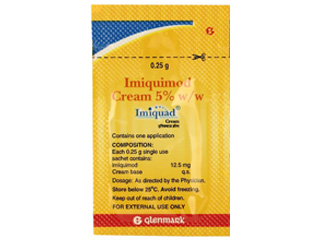
Imiquimod is widely available at Australian community and hospital pharmacies. Most brands come as individual-use sachets (packs of 12, 24, or 36), with some pharmacy compounding for bulk dispensing. See below for indicative pricing and delivery times.
| Pack Size | Indicative Price (PBS) | Private Price | Standard Delivery: Sydney | Melbourne | Brisbane | Perth |
|---|---|---|---|---|---|---|
| 12 sachets (5%) | $41 (General); $7 (Concession) | $51–66 | 1–2 days | 1–2 days | 2–3 days | 3–5 days |
| 24 sachets (5%) | $72 (General); $12 (Concession) | $97–125 | 1–2 days | 1–2 days | 2–3 days | 3–5 days |
Same-day or click-and-collect services are offered by many pharmacies in metropolitan areas. Remote and regional shipping is available; allow extra time for rural/remote locations.
Frequently Asked Questions (FAQ)
- How long does it take for Imiquimod to work?
Most people see improvement within a few weeks, especially with genital warts. Actinic keratosis and superficial BCC may take 4–8 weeks for full effect. Continue the course as prescribed, even if you notice early clearing. - Can I use Imiquimod on all my skin spots?
No—only use Imiquimod for areas prescribed by your doctor. It is not suitable for all lesion types, and some areas (such as near the eyes or inside the nose/mouth) must be avoided unless specialist review has occurred. - What should I do if I forget a dose?
Apply the cream as soon as you remember, unless it's almost time for your next application. Do not apply two doses at once. Continue with your normal schedule. - What if my skin becomes very sore or irritated?
Mild irritation is common. If severe, pause treatment for a few days and apply a moisturiser; consult your doctor or pharmacist if symptoms persist. - Can I sunbathe or use tanning beds while using Imiquimod?
No—avoid direct sunlight and tanning beds while using Imiquimod due to risk of serious irritation and pigment changes. Use broad-spectrum sunscreen and cover treated areas.
For further guidance or personalised support, speak to your pharmacist or medical practitioner. Always follow Australian clinical advice and do not share your medication with others.