Etoricoxib: Patient Information for Australia
Basic Product Information
| International Non-Proprietary Name (INN) | Etoricoxib |
|---|---|
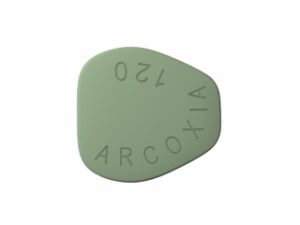
| Australian Brand Names | Arcoxia, Etozox, Etorico |
| ATC Code | M01AH05 |
| Available Forms & Strengths | Film-coated tablets: 30 mg, 60 mg, 90 mg, 120 mg |
| Manufacturers | Merck Sharp & Dohme (Australia) Pty Ltd, various generics |
| Prescription Status | S4 – Prescription only medicine (Rx) |
Etoricoxib is a non-steroidal anti-inflammatory drug (NSAID) used to relieve pain and inflammation in a range of musculoskeletal and joint conditions. It is a ‘COX-2 selective inhibitor’, designed to reduce side effects traditionally associated with older NSAIDs. In Australia, Etoricoxib is only available by prescription and can be obtained from community or hospital pharmacies.
Mechanism of Action
For Patients: Etoricoxib works by blocking an enzyme in the body called cyclo-oxygenase-2 (COX-2), which is involved in the production of prostaglandins — substances responsible for pain, swelling, and inflammation. By blocking this enzyme, Etoricoxib helps to reduce pain and swelling in joints and muscles.
For Specialists: Etoricoxib selectively inhibits the COX-2 isoform, with minimal inhibition of COX-1 at therapeutic doses. This selective action preserves gastrointestinal mucosal prostaglandins while providing effective anti-inflammatory and analgesic effects. Its molecular structure allows for high binding affinity, rapid onset, and predictable pharmacokinetics.
Pharmacokinetics
- Absorption: Rapidly absorbed after oral administration, with peak plasma concentrations within 1 hour (fasted state).
- Metabolism: Primarily metabolised in the liver via CYP enzymes (CYP3A4 major).
- Elimination: Excreted mainly in urine as metabolites; terminal half-life ~22 hours, suitable for once-daily dosing.
- Duration of Action: Provides pain relief for up to 24 hours after a single dose.
These pharmacokinetic properties contribute to Etoricoxib’s convenience as a once-daily medicine in most therapeutic contexts.
Use in Everyday Life and Best Practices
Typical Uses: Joint pain (osteoarthritis, rheumatoid arthritis), lower back pain, gout flares, ankylosing spondylitis, and short-term management of moderate pain following dental or orthopaedic surgery.
- Common Adult Dose: Once daily, adjusted according to condition and age.
- Using the Tablets: Swallow whole with water. Take at the same time each day for best results.
- Duration: Use the lowest effective dose for the shortest possible duration.
- Australian Context: If you are on multiple medicines or are elderly, consult your doctor for individual assessment. Continue to engage in gentle exercise and a balanced diet, as recommended by your health professional.
Dosing: Morning vs Evening
- Morning Dose: Preferred for most conditions so the medicine covers your most active hours. May reduce stiffness and enhance mobility during the day.
- Evening Dose: Sometimes used if pain interferes with sleep. If shifting the timing, discuss with your prescriber or pharmacist.
- Tips:
- Take your dose at the same time each day to maintain steady medication levels.
- Set an alarm or reminder to avoid missed doses.
Taking with Food or on an Empty Stomach
- Can be taken with or without food.
- Food may delay absorption but does not reduce total effect.
- If prone to indigestion or upset stomach, try taking with a meal or snack (e.g., a light breakfast typical in Australia).
- Avoid repeated high-fat meals around the time of taking your medicine, as this may alter absorption.
Interaction Warnings
| Type | Interaction Details | Advice for Patients |
|---|---|---|
| Food | Slows absorption slightly, but no clinical impact | Can be taken with or without food |
| Alcohol | Increased risk of stomach upset or bleeding | Limit alcohol consumption |
| Warfarin/Anticoagulants | Potentially increases effect (bleeding risk) | Monitor INR closely, consult GP |
| ACE Inhibitors, ARBs (e.g., for hypertension) | May reduce effect on blood pressure, can affect kidney function | Regular kidney and blood pressure checks |
| Diuretics | Possible reduced kidney function | Monitor for dehydration, report changes |
| Lithium | Increases lithium levels/toxicity risk | Seek GP advice before combining |
| Other NSAIDs (ibuprofen, naproxen, aspirin) | Increased risk of ulcer/bleeding | Generally avoid concurrent use |
Indications
| Indication | Therapeutic Use | Regulatory Status |
|---|---|---|
| Osteoarthritis (OA) | Long-term pain & inflammation management | Approved |
| Rheumatoid arthritis (RA) | Pain, swelling, improved mobility | Approved |
| Ankylosing spondylitis | Back stiffness, pain, mobility | Approved |
| Acute gouty arthritis | Short-term pain relief during flare | Approved |
| Acute pain post-dental or orthopaedic surgery | Short-term pain management | Approved (short term, adults) |
| Other musculoskeletal pain (off-label) | Short-term relief of moderate, severe pain | Unapproved/off-label |
Dosing According to Clinical Indication
| Condition | Usual Adult Dose | Maximum Daily Dose | Pediatric Use | Elderly Dose |
|---|---|---|---|---|
| Osteoarthritis | 60 mg once daily | 60 mg | Not recommended* | Same as adult; consider co-morbidities |
| Rheumatoid arthritis | 90 mg once daily | 90 mg | Not recommended* | Same as adult; monitor renal, cardiac function |
| Ankylosing spondylitis | 90 mg once daily | 90 mg | Not recommended* | Same as adult; clinical monitoring |
| Acute gout | 120 mg once daily (max 8 days) | 120 mg | Not recommended* | Same as adult; short course only |
| Post-operative dental/orthopaedic pain | Up to 120 mg once daily (max 3 days) | 120 mg | Not recommended* | Same as adult; brief use |
*Etoricoxib is not recommended for children or adolescents under 16 years due to lack of safety data.
Safety Profile and Side Effects
- Common: Headache, dizziness, swelling of legs/feet (fluid retention), high blood pressure, abdominal pain, indigestion, heartburn, diarrhoea.
- Occasional: High cholesterol levels, fatigue, palpitations, cough, skin rash.
- Rare/Serious: Allergic reactions (rash, facial swelling, difficulty breathing), severe abdominal pain (ulcer or bleeding), signs of liver or kidney problems, sudden chest pain (heart attack or stroke risk increases with long-term/high-dose use).
- Warnings: Not suitable for patients with severe heart failure, active peptic ulcers, advanced liver or kidney disease, or allergy to sulfonamides/NSAIDs. Elderly or those with pre-existing heart, liver or kidney problems should be closely monitored.
Guidelines for Proper Use (Pharmacist/Clinical Advice)
- Use at the minimal effective dose and for the shortest necessary period.
- Do not use Etoricoxib with other NSAIDs (e.g., ibuprofen, diclofenac, aspirin for pain).
- Report any side effects such as swelling, high blood pressure, chest pain, breathlessness, or allergic reactions immediately.
- Drink plenty of water and avoid excessive salt (as per Australian Heart Foundation guidelines) to minimise swelling and protect kidneys.
- Have regular check-ups of blood pressure, kidney, and liver function with your GP, especially if using long-term.
- Consult your GP or pharmacist before starting any new medicines, vitamins, or herbal supplements.
- Women intending to become pregnant, or who are pregnant/breastfeeding, should not use Etoricoxib.
- If you miss a dose, take it as soon as remembered, unless almost time for your next dose — never double up doses.
Alternative Treatment Options (PBS-Listed Comparators)
- Other NSAIDs: Ibuprofen, naproxen, diclofenac (less selective, higher gastrointestinal risk, but often less costly and widely available).
- Paracetamol: Effective in mild-moderate osteoarthritis, safer for long-term use, but may offer less pain control for some patients.
- COX-2 Selective NSAIDs (other): Celecoxib (similar selectivity, reimbursed by PBS for some indications; different safety/tolerability for individuals).
- Opioid Analgesics (codeine, tramadol): Used for severe pain when NSAIDs are not tolerated; higher risks and restricted prescribing in Australia.
- Steroid Injections: Occasionally used for joint inflammation/flares but not for routine long-term management.
Pros of Etoricoxib: Once-daily dosing, lower stomach ulcer risk than some NSAIDs.
Cons: Not suitable for everyone (heart, kidney risk), generally more expensive than generic NSAIDs, PBS subsidised mainly for specific conditions.
Legal, Registration & Reimbursement Status in Australia
- Regulator: Therapeutic Goods Administration (TGA)
- Prescription: S4 – Prescription required
- PBS Listing: Available on the Pharmaceutical Benefits Scheme for osteoarthritis, rheumatoid arthritis, ankylosing spondylitis, as well as short-term use in acute gout (subject to clinical restrictions).
- Dispensing: Available from all pharmacies throughout Australia upon presentation of a valid prescription.
Latest Research and Clinical Guidance (2022–2025)
- Recent TGA and PBS reviews maintain Etoricoxib’s role as a useful option for those who cannot tolerate traditional NSAIDs, but recommend its use primarily in patients at increased risk of gastrointestinal side effects (Hawthorne et al., MJA, 2023).
- Current clinical guidelines recommend careful cardiovascular and renal risk screening prior to and during therapy, particularly in the elderly or those with co-morbidities (Australian Rheumatology Association Position Statement, 2024).
- Head-to-head trials (Emery et al., Lancet Rheumatology, 2022) confirm Etoricoxib’s efficacy is on par with celecoxib, with non-inferior GI safety but ongoing need for cardiac risk caution.
Availability and Delivery
- Pack sizes: 7, 14, 28 tablets (may vary by strength and brand).
- Indicative price: PBS co-payment for eligible patients ($7.30 concession, $30.00 general as of 2024); private price varies from $17–$65/pack depending on strength and pharmacy provider.
| City | Pharmacy Collection | Standard Delivery Time (Online Pharmacy) |
|---|---|---|
| Sydney | Same day (in stock) or <1 day | 1-2 business days |
| Melbourne | Same day (in stock) or <1 day | 1-3 business days |
| Brisbane | Same day (in stock) or <1 day | 2-3 business days |
| Adelaide | Same day (in stock) or <1 day | 2-4 business days |
| Perth | 1 day (in stock) or next day | 3-5 business days |
Frequently Asked Questions (FAQ)
- Can I take Etoricoxib if I have heart problems?
Etoricoxib should be avoided in patients with serious heart conditions or a history of heart attack, stroke, or uncontrolled blood pressure. Always discuss your medical history with your prescribing doctor. - Is it safe to use Etoricoxib with other painkillers?
Do not take Etoricoxib with other NSAIDs (e.g., ibuprofen, diclofenac, aspirin for pain). However, it can often be used with paracetamol. Always check with your pharmacist or doctor. - What should I do if I miss a dose?
Take it as soon as you remember, unless it’s almost time for your next dose. Never double your dose to make up for a missed one. - Can I drink alcohol while on this medicine?
Moderate alcohol is generally safe, but excessive drinking can increase the risk of stomach irritation or bleeding. Stick to the national alcohol guidelines. - Is Etoricoxib safe in pregnancy or breastfeeding?
No, Etoricoxib is not recommended during pregnancy or breastfeeding. Speak to your GP about safer alternatives if you are planning a family.
For any other questions or personalised advice, please contact your pharmacist or GP.