Tobramycin and Dexamethasone: Patient Information for Australia
Basic Product Information
| International Non-proprietary Name (INN) | Tobramycin and Dexamethasone |
|---|---|
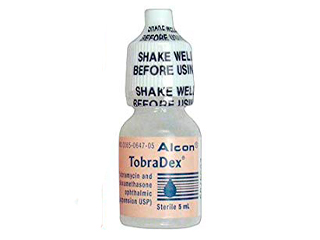
| Australian Common Brand Names | Tobradex®, Tobradex Eye Drops®, Tobradex Eye Ointment® |
| ATC Code | S01CA01 (tobramycin + dexamethasone) |
| Available Forms & Strengths | Eye drops (suspension): Tobramycin 0.3% + Dexamethasone 0.1% Eye ointment: Tobramycin 0.3% + Dexamethasone 0.1% |
| Manufacturers | Novartis Australia, Arrow Pharmaceuticals, APO Health, Others |
| Prescription Status | Prescription Only (Schedule 4 – Prescription Medicine) |
Mechanism of Action
For Patients: Tobramycin and dexamethasone is a combination eye treatment. Tobramycin is an antibiotic that fights bacteria causing eye infections. Dexamethasone is a corticosteroid that reduces inflammation, redness, and swelling. Used together, these medicines treat eye infections and help your eye heal more comfortably.
For Specialists: Tobramycin, an aminoglycoside antibiotic, acts by inhibiting protein synthesis at the 30S ribosomal subunit of susceptible Gram-negative and certain Gram-positive bacteria. Dexamethasone, a potent glucocorticoid, downregulates proinflammatory gene expression, suppresses neutrophil migration, and inhibits inflammatory mediators, leading to reduced inflammation in ocular tissues.
Pharmacokinetics
- Absorption: With ophthalmic application, systemic absorption is minimal; most action is local at the site of administration.
- Metabolism: Dexamethasone undergoes minimal ocular metabolism; any absorbed drug is metabolised hepatically. Tobramycin is not extensively metabolised.
- Elimination: Any systemic fraction of tobramycin is excreted unchanged by kidneys; dexamethasone metabolites are renally excreted.
- Duration of Action: Local effect persists for several hours; dosing is usually every 4–6 hours depending on the indication.
Use in Everyday Life and Best Practices
Tobramycin and dexamethasone eye drops or ointment are used to treat bacterial eye infections with significant inflammation, such as conjunctivitis or after cataract surgery. They are available only by prescription in Australia. Typical instructions include:
- Wash your hands before and after applying eye drops or ointment.
- Shake the bottle well (if using drops) before use.
- Apply the prescribed number of drops into the pocket formed by pulling down your lower eyelid; do not touch the bottle tip to your eye.
- If using both drops and ointment, apply the drops first, wait 5 minutes, then apply the ointment.
- Continue regular application as advised, even if your symptoms improve, unless otherwise instructed by your doctor.
- Complete the full treatment course to avoid recurrence or resistance.
Never share your eye medication with others. Store the medicine out of reach of children, away from direct sunlight or heat.
Dosing in the Morning vs. Evening
- Morning Dosing: Morning doses can help establish a routine and are easier to remember, especially for multiple daily doses.
- Evening Dosing: If your symptoms are worse in the evening, dosing later can help relieve them at night.
- Tips: Take doses at evenly spaced intervals (e.g., every 4 or 6 hours) to maintain consistent medication levels; use reminders or a dosing chart.
- Regularity: Consistency is essential – use your eye drops or ointment at similar times each day.
Taking with Food or on an Empty Stomach
Since tobramycin and dexamethasone are used as eye drops or ointment, meals do not affect their action. There are no restrictions related to Australian dietary habits (such as breakfast timing or typical meals). If you experience an aftertaste or mild throat irritation, rinsing your mouth with water may help.
Interaction Warnings
While systemic absorption is low, you should inform your healthcare provider about all your medications to avoid potential interactions.
| Interacting Substance | Potential Effect | Advice |
|---|---|---|
| Other Eye Medicines | Can dilute or affect absorption | Leave at least 5–10 min between medicines |
| Systemic Aminoglycosides | Increased risk of side effects (rare) | Inform your doctor if you use any aminoglycoside antibiotics |
| Contact Lenses | May be affected by preservatives; can worsen infection | Do not wear contact lenses during treatment (unless approved by your doctor) |
| Alcohol | No direct interaction | Safe in moderation; avoid if you experience dizziness or blurred vision |
Indications
| Indication | Status | Notes |
|---|---|---|
| Bacterial conjunctivitis with inflammation | Official | First-line when both infection and inflammation present |
| Infectious blepharitis | Official | Short courses only |
| Post-operative ocular inflammation (e.g., after cataract surgery) | Official | Short-term prevention/treatment |
| Corneal injury (mild, with infection risk) | Off-label | At doctor’s discretion |
Dosing According to Clinical Indications
| Indication | Age Group | Recommended Dose | Duration |
|---|---|---|---|
| Bacterial conjunctivitis | Adults | 1–2 drops in affected eye(s) every 4–6 hours | 5–14 days |
| Bacterial conjunctivitis | Children (>2 years) | 1 drop in affected eye(s) every 6 hours | 7 days or as directed |
| Post-operative inflammation | Adults/Elderly | 1–2 drops every 4 hours | Up to 14 days |
| Infectious eyelid inflammation | Adults/Children | Thin layer of ointment 3–4 times daily | Maximum 7 days |
Note: Final dosing is always as prescribed by your ophthalmologist or GP. Never exceed recommended treatment duration without review, as long-term steroid use may increase eye pressure or risk of other complications.
Safety Profile & Side Effects
- Common: Temporary eye discomfort (burning, stinging), blurred vision after application, dry eyes, mild redness.
- Less Common: Increased eye pressure (especially if used >7–10 days), allergic reactions (itchiness, swelling), eye infection (with long-term use), headache.
- Rare: Cataract formation (chronic use), secondary eye infections (fungal or viral), hypersensitivity, taste disturbance.
| Side Effect | Frequency | Advice |
|---|---|---|
| Eye discomfort/irritation | Very common | Usually mild and temporary |
| Blurred vision (after use) | Common | Wait until clear before driving |
| Increased eye pressure | Uncommon (long-term use) | Monitor if used >7 days; tell your doctor if you feel eye pain or vision changes |
| Allergic reaction | Rare | Stop use, seek medical advice if eyelid swelling, severe redness, or rash occurs |
| Fungal/viral eye infection | Very rare (long-term use) | Inform your doctor if symptoms worsen or new symptoms appear |
Guidelines for Proper Use (Australia Advice)
- Use only as directed by your doctor; complete the entire treatment course.
- Do not wear contact lenses during treatment without your doctor’s approval.
- Monitor for signs of new or worsening symptoms—seek care if you develop pain, swelling, or loss of vision.
- If you miss a dose, use it as soon as you remember. If it’s nearly time for your next dose, skip the missed one—do not double up.
- Store your medication below 25°C; do not freeze. Close the bottle tightly after each use.
- Dispose of any remaining drops/ointment 28 days after opening, even if there is some left.
- Do not share your medicine—even if someone else has similar symptoms.
If in doubt, seek advice from your pharmacist or GP.
Alternative Treatment Options
- Chloramphenicol Eye Drops (Chemist Warehouse, PBS-listed): Effective for bacterial conjunctivitis, no anti-inflammatory action. + Inexpensive, – Not for inflammation
- Fusidic Acid Gel: For certain eye infections; does not treat inflammation. + Convenient gel, – Not for combined inflammation
- Prednisolone Acetate Eye Drops: Stronger anti-inflammatory only (no antibiotic). + For non-infectious inflammation, – Not antibacterial
- Maxitrol® (Neomycin + Polymyxin B + Dexamethasone): Broader antibiotic coverage, similar application. + Used when mixed infection likely, – Higher allergy risk
- Levofloxacin or Ciprofloxacin Eye Drops: For resistant cases or severe infection; available on prescription. + Potent antibacterial, – No anti-inflammatory effect
Treatment is chosen based on the cause and severity of infection and inflammation. Products listed are available on prescription and some are reimbursed under the Pharmaceutical Benefits Scheme (PBS).
Legal, Registration, and Reimbursement Status in Australia
- Legal Status: Prescription only (Schedule 4) under the Poisons Standard, regulated by the Therapeutic Goods Administration (TGA).
- Registration: Approved for use in Australia by the TGA; full product details available on the Australian Register of Therapeutic Goods (ARTG).
- Reimbursement: Some brands and generic versions of tobramycin and dexamethasone are available under the Pharmaceutical Benefits Scheme (PBS), subject to approved indications and patient eligibility.
- Prescriber: Only registered medical practitioners (GPs, ophthalmologists) can prescribe; dispensing is through registered pharmacies.
Latest Research and Clinical Guidance (2022–2025)
- The Royal Australian and New Zealand College of Ophthalmologists (RANZCO) recommends judicious use of combination steroid-antibiotic drops after cataract and other eye surgeries to reduce swelling and prevent infection. (RANZCO Clinical Guidelines 2024)
- Minimising the duration of corticosteroid use is essential to reduce the risk of increased intraocular pressure, particularly in patients with a glaucoma history (J Cataract Refract Surg. 2023;49(7):1037–1047).
- Recent data supports combination therapy for moderate–severe conjunctivitis where both infection and inflammation are present, but highlights the need for close follow-up. (BMJ Open Ophthalmology. 2024;9:e001295).
- PBS listing status and safety reminders are routinely reviewed by the TGA and PBS authority; always check the PBS Schedule for updates before prescribing.
Availability and Delivery
| Pack Size | Indicative Price (AUD) | Delivery Timelines (Retail Pharmacy) |
|---|---|---|
| 5 mL Eye Drops | $20–$29 | Same day (capital cities); 1–2 business days (regional) |
| 3.5 g Eye Ointment | $19–$25 | Same day (major cities); 1–2 business days (regional/remote) |
Availability can vary; some brands or generics may be subsidised under PBS. Most pharmacies in Australia offer rapid delivery to metropolitan areas such as Sydney, Melbourne, Brisbane, Perth, and Adelaide, with slightly longer times for regional New South Wales, Victoria, Queensland, Tasmania, South Australia, Western Australia, and the Northern Territory.
Frequently Asked Questions (FAQ)
- How long should I use Tobramycin and Dexamethasone eye drops?
Use for the full course prescribed by your doctor—usually 5–14 days, depending on your condition. Do not stop early even if you feel better unless advised by your prescriber. - Is it safe to drive after using these eye drops?
Your vision may be blurred temporarily after using the drops or ointment. Wait until your vision is clear before driving or operating machinery. - Can I use Tobramycin and Dexamethasone while pregnant or breastfeeding?
Tell your doctor if you are pregnant, planning a pregnancy, or breastfeeding. Use of steroid-antibiotic eye medicines during pregnancy is only recommended if clearly needed and under medical supervision. - Are there any habits or foods to avoid while using these eye preparations?
There are no dietary restrictions. Do not wear contact lenses during treatment, avoid rubbing your eyes, and always wash your hands before use. - What should I do if I miss a dose?
Apply the missed dose as soon as you remember. If it’s nearly time for your next dose, skip the missed one. Do not use two doses at once to make up for it.
If you have more questions, ask your pharmacist or GP for personalised advice.