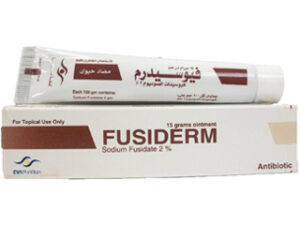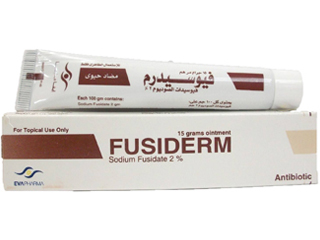
Fusiderm B (Betamethasone and Fusidic Acid) – Comprehensive Patient Information for Australia
Basic Product Information
| International Nonproprietary Names (INN) | Betamethasone, Fusidic Acid |
|---|---|
| Australian Brand Names | Fusiderm B, Fucidin H |
| Anatomical Therapeutic Chemical (ATC) Code | D07CC01 (Betamethasone and Antibiotics in Combination) |
| Available Forms & Strengths | Cream: Betamethasone valerate 0.1% w/w & Fusidic Acid 2% w/w |
| Manufacturers | Leo Pharma, Mylan, various generic manufacturers |
| Prescription Status in Australia | Prescription Only (Schedule 4 / S4) |
Mechanism of Action
- Fusidic Acid
For patients: Fusidic acid is an antibiotic. It works by stopping the growth of bacteria that cause skin infections.
For healthcare professionals: Fusidic acid inhibits bacterial protein synthesis by preventing the turnover of elongation factor G (EF-G), primarily active against Gram-positive organisms (notably Staphylococcus aureus). - Betamethasone
For patients: Betamethasone is a corticosteroid, which acts to reduce inflammation, redness, itching, and swelling on the skin.
For healthcare professionals: Betamethasone exerts anti-inflammatory, anti-pruritic, and vasoconstrictive effects, suppressing the migration of polymorphonuclear leukocytes and reversing capillary permeability.
Pharmacokinetics
- Absorption: Topical application leads to local skin absorption. Intact skin minimises systemic absorption, but broken or inflamed skin may increase absorption, particularly of betamethasone.
- Metabolism: Betamethasone is metabolised in the liver once absorbed systemically. Fusidic acid undergoes hepatic metabolism, mostly unchanged when applied topically.
- Elimination: Metabolites are excreted primarily via the kidneys (betamethasone); topical fusidic acid results in minimal systemic levels.
- Duration of Action: Local effect persists for several hours after application. Do not apply more frequently than prescribed without healthcare advice.
Use in Everyday Life and Best Practices
Fusiderm B is suitable for the treatment of inflamed, infected skin conditions—frequently used for eczema with secondary bacterial infection or impetigo.
Typical application: Apply a thin layer to the affected area, usually 2–3 times daily (exact frequency as advised by your doctor).
- Clean and dry the affected area before application.
- Wash hands before and after use, unless treating hands.
- Avoid excessive use and never cover with tight dressings unless directed by your healthcare provider, as this can increase absorption and risk of side effects.
- Take care to prevent contact with eyes, mouth, or mucous membranes.
- Do not use on open wounds or broken skin without medical supervision.
- Do not use for prolonged periods or on large areas unless prescribed.
Dosing in the Morning vs Evening
- Morning application: Applying in the morning is preferable for most people as it suits routines, improves compliance, and reduces risk of transfer to bedding or eyes.
- Evening application: Useful if twice daily application is prescribed, ensuring an even gap between doses. Applying at night may be practical if the skin is less likely to rub off cream or if a dressing is recommended.
- Regularity: Try to apply at evenly spaced intervals. Consistency ensures optimal effect and reduces risk of bacterial resistance.
Taking with Food or on an Empty Stomach
Fusiderm B is a topical preparation and does not need to be taken with food.
However, after application, avoid preparing or handling food until you have thoroughly washed your hands.
Australian patients may find it easier to remember morning and evening applications by linking them with mealtimes.
Interaction Warnings
| Substance | Interaction | Advice |
|---|---|---|
| Alcohol (skin contact) | May irritate already inflamed skin | Avoid exposing treated areas to alcohol-based products |
| Other Topical Medicines | Potential for dilution or reduced effectiveness | Separate applications by at least 30 minutes |
| Systemic Steroids | Risk of cumulative corticosteroid side effects | Use only under close medical supervision |
| Immunosuppressive Drugs | Further immune suppression possible | Report infections or delayed healing to your doctor |
| Oral Antibacterials | Generally safe; but avoid duplicate therapy | Inform your healthcare provider if using other antibiotics |
Indications
| Indication | Official Status in Australia |
|---|---|
| Impetiginised eczema (eczema with bacterial infection) | Approved |
| Primary and secondary superficial skin infections (e.g., impetigo) | Approved |
| Infected dermatitis | Approved |
| Other mixed inflammatory and bacterial dermatoses | Off-label; specialist discretion |
Dosing According to Clinical Indications
| Clinical Population | Recommended Dose | Duration |
|---|---|---|
| Adults | Thin layer to affected area 2–3 times daily | Usually up to 2 weeks |
| Paediatric (children >1 year) | As for adults, but avoid large areas or prolonged use | Maximum 1 week; review by GP if longer needed |
| Infants (<1 year) | Specialist supervision only | As advised |
| Elderly | As for adults; adjust for frail skin | Review after 1 week |
Safety Profile and Side Effects
- Common side effects (may affect up to 1 in 10 people):
- Itching, burning, stinging at the site of application
- Skin dryness or irritation
- Uncommon/rare side effects:
- Allergic skin reactions, such as rash or hives
- Worsening of skin infection (if overused or used improperly)
- Folliculitis (boils or pimples at hair roots)
- Perioral dermatitis (rash around the mouth with long-term use)
- Systemic corticosteroid absorption: possible if used for long periods, on large areas, or under occlusion; can cause adrenal suppression (very rare in topical use but possible)
- Warnings:
- Not suitable for use on viral or fungal skin infections (e.g., cold sores, thrush; see GP for guidance)
- Do not use near the eyes; may cause glaucoma or cataracts with prolonged exposure
- Report severe irritation, redness, or new infections to your doctor promptly
Guidelines for Proper Use (Pharmacist Advice)
- Use only for the condition prescribed and for the recommended duration
- Do not share the cream with others, even if they have similar symptoms
- If the condition does not improve within a week, consult your GP
- Do not use under tight, waterproof, or occlusive dressings unless specifically instructed
- Dispose of outdated or unused cream in community pharmacy return bins (not general waste)
- Notify your pharmacist or doctor of any other medicines or skin products you are using
Alternative Treatment Options
- Fusidic acid cream/ointment (without steroid): Suitable if inflammation is mild, but less effective if swelling or itch is severe.
- Topical corticosteroids (e.g., betamethasone or hydrocortisone alone): Useful for non-infected inflammatory skin conditions; not appropriate if infection is present.
- Mupirocin ointment (Bactroban): Alternative topical antibiotic, especially for impetigo; no anti-inflammatory action.
- Oral antibiotics: Necessary for widespread infection or when topical treatment fails; requires GP review.
- Non-pharmacological care: Keeping skin clean, cool, and dry; avoiding triggers or irritants (per Australian guideline recommendations).
Most of these alternatives are on the PBS (Pharmaceutical Benefits Scheme), subject to GP prescription and clinical justification.
Legal, Registration, and Reimbursement Status in Australia
- Therapeutic Goods Administration (TGA): Registered medication by the TGA; prescription-only schedule (S4).
- PBS status: Both fusidic acid/betamethasone combination and its components are PBS-listed for select indications, usually following GP consultation.
- Prescription requirement: Legal requirement for an Australian GP, dermatologist, or nurse practitioner prescription.
- Dispensing: Only from community or hospital pharmacies.
- Reimbursement (PBS): Patient copay applies if eligible; some private scripts may not be eligible.
Latest Research and Clinical Guidance (2022–2025)
- National Institute for Health and Care Excellence (NICE) UK guidelines (2022) and Australian Dermatology Society recommend combination topical antibiotics and corticosteroids only for clearly infected inflammatory skin conditions, for limited durations to reduce risk of antimicrobial resistance (Smith et al., Australian Prescriber, 2023; NICE Eczema Guidelines, 2022).
- Australian Therapeutic Guidelines (Dermatology, 2023) emphasise careful patient selection, avoidance of long-term use, and systematic GP review if no improvement after 7 days.
- Current Australian studies (Nguyen et al., 2024) support short-course use and note no added benefit from prolonged application, reinforcing safety and efficacy for targeted indications.
- International antimicrobial stewardship initiatives (Lancet Infectious Diseases, 2024) highlight the importance of strict adherence to prescribed use, due to rising resistance rates.
Availability and Delivery
| Popular Pack Sizes | Indicative Retail Price (PBS/private) | Availability & Delivery (Selected Cities) |
|---|---|---|
| 15g, 30g tubes | $13–$18 PBS; up to $30–$40 private | Sydney, Melbourne: Same day to 2 working days Brisbane, Perth, Adelaide: 1–3 working days Regional/rural: 2–4 working days; subject to stock at local pharmacy |
Frequently Asked Questions (FAQ)
- How long should I use Fusiderm B?
For most infections, treatment lasts 5–14 days. If your skin does not improve in 7 days, or worsens, seek GP advice. Prolonged use is generally not recommended. - Can I use Fusiderm B on my face?
Only use on the face if specifically prescribed by your doctor. Take care to avoid the eyes and mouth. Prolonged or repeated use on the face can cause skin thinning. - What should I do if I forget an application?
Apply as soon as you remember, unless it is nearly time for your next dose. Do not apply extra cream to make up for a missed dose. - Is Fusiderm B safe for children?
Yes, if prescribed by a doctor, but typically for short periods and only in small amounts. Use in children under 1 year requires specialist advice. - Will I experience side effects?
Most people do not, but some may notice mild burning or irritation. Severe reactions are rare. If you develop a rash, worsening infection, or other unusual symptoms, stop use and contact your doctor.
For further information, please consult your GP, dermatologist, or pharmacist. This information is intended as a guide only and not a substitute for medical advice.