Budesonide/Formoterol Inhaler – Patient Information for Australia
Basic Product Information
| International Non-proprietary Names (INN) | Budesonide / Formoterol fumarate dihydrate |
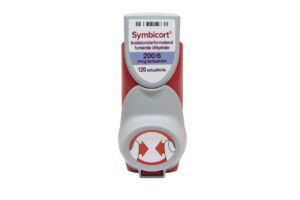
| Brand Names in Australia | Symbicort® (AstraZeneca), DuoResp® Spiromax (Teva) |
| ATC Code | R03AK07 |
| Available Forms & Strengths | - Turbuhaler, Spiromax: 100/6 mcg, 200/6 mcg, 400/12 mcg per inhalation
|
| Manufacturers | AstraZeneca Pty Ltd, Teva Pharma Australia Pty Ltd |
| Prescription Status | S4 (Prescription Only Medicine) |
Mechanism of Action
For patients: Budesonide/Formoterol is a combination inhaler containing two active medicines:
- Budesonide is a corticosteroid that reduces inflammation in your airways, helping to prevent and relieve symptoms like wheezing and shortness of breath.
- Formoterol is a long-acting bronchodilator that relaxes the muscles in your airways, making it easier to breathe.
This inhaler is used regularly to control asthma and chronic obstructive pulmonary disease (COPD), reducing the frequency and severity of attacks.
For specialists: The combination provides anti-inflammatory action (via glucocorticoid receptor modulation, suppressing inflammatory gene transcription) and sustained bronchodilation (β2-adrenergic receptor agonism, increasing intracellular cAMP and smooth muscle relaxation).
Pharmacokinetics
- Absorption: Both budesonide and formoterol are rapidly absorbed in the lungs after inhalation, with systemic bioavailability of around 30-40% for budesonide and approximately 60% for formoterol.
- Metabolism: Budesonide undergoes extensive hepatic metabolism via CYP3A4 to inactive metabolites. Formoterol is primarily metabolised by direct glucuronidation and O-demethylation.
- Elimination: Budesonide’s metabolites are mainly excreted in the urine, while formoterol is eliminated via urine (formoterol/its metabolites) and faeces.
- Duration of Action: Formoterol acts within 1–3 minutes and lasts up to 12 hours; budesonide’s effects persist with regular use.
Use in Everyday Life and Best Practices
- How to Use: Inhale as prescribed from your device (Turbuhaler or Spiromax) – do not swallow capsules or use with a spacer unless advised. Rinse your mouth and spit after each use to prevent oral thrush.
- Typical Doses:
- Asthma (maintenance & reliever): 1–2 inhalations (100/6 or 200/6 strengths), 1–2 times daily, plus as-needed for reliever.
- COPD: Usually 2 inhalations twice daily (Symbicort 200/6 or 400/12).
- If you miss a dose, take it as soon as you remember, unless it’s close to your next dose. Do not double up.
- Keep the inhaler dry, store at room temperature, and renew on pharmacist advice if exposed to extreme heat.
- Always follow your asthma or COPD action plan provided by your GP or nurse.
Dosing: Morning vs Evening
- Morning dosing: May help control symptoms during day-to-day activity, especially in those active in the mornings.
- Evening dosing: Useful if symptoms are worse overnight.
- Best Practice: Most people take half their dose in the morning and half in the evening for steady control. The most important thing is regularity—take it at the same times every day.
Taking with Food or On an Empty Stomach
- Budesonide/formoterol inhalers are not affected by food, as they work locally in the lungs.
- You can use your inhaler before or after meals.
- This makes them convenient with any standard English or Australian diet.
- Some people prefer rinsing with water after inhaler use before eating or drinking to prevent oral side effects.
Interaction Warnings
| Substance / Category | Interaction & Management |
| Strong CYP3A4 inhibitors (e.g., ketoconazole, clarithromycin) | Increase budesonide exposure; monitor for side effects, adjust dose if needed. |
| Other long-acting β2-agonists (LABA) | Risk of additive side effects—do not use with other LABAs. |
| Beta-blockers | May reduce effectiveness of formoterol; avoid if possible, discuss with your doctor. |
| Potassium-lowering drugs (e.g., some diuretics) | Increased risk of low potassium; monitor blood levels as advised. |
| Alcohol | No significant direct interaction, but excess alcohol may worsen breathing problems. |
| Grapefruit juice | May increase budesonide levels; best to limit intake. |
| Vaccines (live/attenuated) | Generally safe; consult your GP or nurse for any new vaccinations. |
Indications
| Indication | Regulatory status (Australia) | Comment |
| Asthma (maintenance and reliever therapy) | Approved | Adults & children >12 years (depends on formulation) |
| Chronic Obstructive Pulmonary Disease (COPD) | Approved | Adults only, for severe COPD and recurrent exacerbations |
| Off-label: Mild asthma reliever | Variable/Off-label | Current guidelines support in select patients (source: GINA & National Asthma Council Australia) |
Dosing According to Clinical Indication
| Population | Condition | Usual Dose | Max Dose per Day | Notes |
| Adults | Asthma (maintenance + reliever) | 1–2 puffs once or twice daily, plus as-needed reliever use | 12 inhalations/24h (100/6 or 200/6) | As per GP/asthma action plan |
| Adults | COPD | 2 puffs twice daily (200/6 or 400/12) | 4 inhalations/24h | For severe or frequent exacerbations |
| Children (6–11 yrs) | Asthma (maintenance) | 1 puff twice daily (100/6 only) | 2 inhalations/24h | Use only under specialist direction |
| Elderly (>65 yrs) | Asthma or COPD | As for adults; no specific dose adjustment needed, but monitor more closely | As above | Increased risk of some side effects |
Safety Profile and Side Effects
- Common side effects (1–10%):
- Oral thrush (white patches in mouth)
- Hoarse voice, sore throat, cough
- Headache
- Slight tremor or palpitations
- Occasional (0.1–1%):
- Muscle cramps, nausea, raised heart rate
- Skin bruising (mainly in elderly)
- Rare (less than 0.1%):
- Paradoxical bronchospasm (wheezing just after inhalation)
- Severe allergic reactions (rash, swelling, difficulty breathing)
- Growth suppression in children (rare with inhaled steroids, but monitor)
- Adrenal suppression with very high doses/prolonged use
- Warnings:
- Contact your GP if you experience chest pain, severe breathlessness, or symptoms worsen rapidly.
- Report unusual bruising or weakness.
Guidelines for Proper Use (Australia)
- Always read the consumer medicines information (CMI) leaflet supplied by your pharmacy.
- Check and practice inhaler technique with your pharmacist or asthma/COPD nurse—this is crucial for proper use.
- Keep a record of doses remaining (window on most inhalers shows how many are left).
- Carry your inhaler with you at all times. Keep a reliever (salbutamol/ventolin) as advised.
- Book regular check-ups with your GP, even if you feel well.
- If travelling interstate or to remote areas, carry a spare inhaler and check state/territory arrangements for prescription supply.
Alternative Treatment Options
- Other combination preventers:
- Fluticasone/Salmeterol (Seretide®, PBS listed; similar efficacy for many patients)
- Fluticasone/Vilanterol (Breo® Ellipta; once daily, suitable for some but not reimbursed for all)
- Mometasone/Formoterol (Dulera®; not commonly available/reimbursed in Australia)
- Pros and cons:
- Budesonide/Formoterol specifically allows single-inhaler maintenance and reliever therapy (MART), strongly supported in recent guidelines for suitable patients.
- Some alternatives are used once daily (convenience), but may not provide flexible rapid reliever dosing.
- Generic options available, discuss with your pharmacist regarding cost and device preference.
Legal, Registration, and Reimbursement Status in Australia
- Registered with the Therapeutic Goods Administration (TGA).
- Prescription (S4) required by Australian law; cannot be purchased over-the-counter.
- Pharmaceutical Benefits Scheme (PBS) listed for eligible patients with asthma and COPD in accordance with clinical criteria (evidence of diagnosis/exacerbations).
- Most private and public insurance plans recognise prescriptions for this medicine.
- Rebates may apply for concession card holders—ask your pharmacist for PBS pricing information.
Latest Research and Clinical Guidance (2022–2025)
- Asthma: 2023–2024 National Asthma Council Australia and GINA guidelines recommend budesonide/formoterol, especially for maintenance-and-reliever (SMART/MART) therapy, reducing the need for separate reliever inhalers and lowering the risk of severe flare-ups.
- COPD: Recent studies support its benefit in reducing exacerbations in those with frequent flare-ups and eosinophilic inflammation, but inhaled corticosteroids are not first-line for all COPD patients.
- Research consistently shows that good inhaler technique and regular medical review are vital for best outcomes.
- New device training materials and videos are available from National Asthma Council Australia and Lung Foundation Australia (visit their website for updated resources).
Availability and Delivery
| Strength/Pack | Usual Inhalations | Indicative PBS Price* | Delivery to: | Usual Timeframe |
| 100/6 mcg Turbuhaler | 60, 120, 180 | $6.70 (concession), $30.50 (general) | Sydney, Melbourne, Brisbane | 1–2 business days |
| 200/6 mcg Turbuhaler | 60, 120 | $6.70, $30.50 | Perth, Adelaide, Hobart | 2–4 business days |
| 400/12 mcg Turbuhaler | 60 | $6.70, $30.50 | Darwin, Canberra, major regional centres | Up to 5 business days |
*Prices are indicative PBS costs (as of June 2024). Actual prices may vary by pharmacy and are subject to government changes.
Frequently Asked Questions (FAQ)
- Q1: Can I use my Budesonide/Formoterol inhaler during an asthma attack?
A: Yes, for many asthma patients, the inhaler can be used as both maintenance and reliever. Follow your action plan—if severe or not improving, seek urgent help (call 000). - Q2: What should I do if I forget a dose?
A: Take the missed dose as soon as possible unless it is almost time for your next dose. Do not take a double dose. - Q3: Is it safe during pregnancy and breastfeeding?
A: Generally considered safe; speak to your doctor or pharmacist for personalised advice. - Q4: How do I know if my inhaler is empty?
A: Most inhalers have a dose counter which shows how many doses are left. Ask your pharmacist for help if unsure. - Q5: Can I travel with my inhaler?
A: Yes, it is allowed on domestic and international flights. Carry it in your hand luggage, with a copy of your prescription.