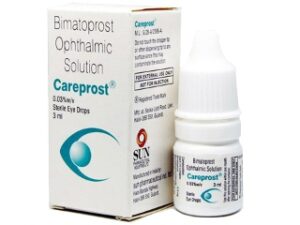
Careprost + Applicators (Bimatoprost): Comprehensive Patient Information for Australia
Basic Product Information
| International Nonproprietary Name (INN) | Bimatoprost |
|---|---|
| Australia Brand Names | Careprost, Lumigan |
| ATC Code | S01EE03 |
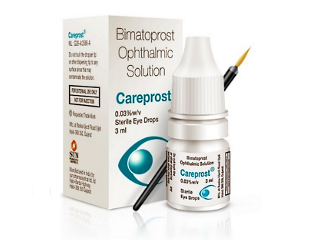
| Available Forms & Strengths | Ophthalmic solution 0.03% (3 mL bottle); usually supplied with sterile applicators for precise application |
| Manufacturers | Sun Pharmaceutical Industries Ltd., Allergan Australia Pty Ltd, other TGA-approved manufacturers |
| Prescription Status | Prescription Only Medicine (Schedule 4, S4) in Australia |
Mechanism of Action
For patients:
Careprost (Bimatoprost) is a synthetic medication similar to a natural substance found in the body called prostaglandin. It works by increasing the amount of fluid that drains out of the eye, which helps to lower the pressure inside the eye. When used for eyelash growth, Careprost makes eyelashes grow longer, thicker, and darker by extending the growth phase of the lash hair cycle.
For specialists:
Bimatoprost is a prostamide analog. It selectively mimics the actions of naturally occurring prostamides in the eye, increasing trabecular meshwork and uveoscleral outflow, thus lowering intraocular pressure (IOP). For eyelash enhancement, bimatoprost acts on hair follicles, prolonging the anagen (growth) phase, resulting in increased hair length and pigmentation.
Pharmacokinetics
- Absorption: Following ocular administration, systemic absorption is low. Peak plasma concentrations are usually below detection or very low.
- Metabolism: Extensively metabolised in the liver to inactive metabolites.
- Elimination: Excreted mainly via the kidneys.
- Duration of action: Ocular pressure-lowering effect lasts up to 24 hours; lash growth is incremental and becomes noticeable after 8–12 weeks of daily use.
Use in Everyday Life & Best Practices (Australian Context)
Typical Uses:
- Glaucoma & Ocular Hypertension: To reduce high intraocular pressure and prevent optic nerve damage.
- Eyelash Enhancement: For people with inadequate or short eyelashes (hypotrichosis).
How to use:
- Wash your hands before application.
- If using for glaucoma: Instill 1 drop once daily into the affected eye(s), usually in the evening.
- If using for eyelash growth: Apply one drop nightly to the supplied sterile applicator, then carefully brush onto the upper lash line (not into the eye or lower lashes). Blot any excess.
- Remove contact lenses before application; reinsert after 15 minutes.
- Do not touch the tip of the bottle or applicator to any surface.
- If using other eye drops, allow at least 5 minutes between medicines.
- Store out of reach of children, away from direct sunlight, and under 25°C.
- Dispose of unused solution after 30 days from opening to minimise infection risk.
- Regular follow-up with your optometrist or ophthalmologist is important, especially for eye pressure monitoring.
Dosing in the Morning vs Evening
Careprost is traditionally used in the evening, mainly for two reasons:
- Evening use aligns with clinical trials and may reduce risk of mild eye irritation during the day.
- Consistency is key. Choose a time you can stick to daily. If applying in the morning is easier for your routine and recommended by your doctor, that's also acceptable.
- Set a daily reminder on your phone or place the bottle near your toothbrush as a prompt.
- Missing a dose: Apply the next dose as scheduled. Do not double up.
Taking with Food or on an Empty Stomach
Careprost is applied topically to the eye or lashes and does not interact with food. There’s no requirement to use it on a full or empty stomach.
- For those with sensitive eyes after meals (such as spicy foods, a common English preference), wait 20 minutes post-meal for comfortable application.
- Careprost does not interact with major Australian dietary staples: eggs, grains, dairy, fish, fruits, or vegetables.
Interaction Warnings
Potential Interactions
| Item | Advice |
|---|---|
| Alcohol | Safe – no known direct interaction; avoid heavy use if it impairs application. |
| Other Eye Drops | Wait at least 5 minutes between different eye medications. Use Careprost last if possible. |
| Contact Lenses | Remove before application; wait 15 minutes before reinserting. |
| Other Prostaglandin Analogues | Avoid using multiple prostaglandin analogs simultaneously unless directed by your doctor. |
| Pregnancy & Breastfeeding | Not recommended unless clearly necessary; consult your GP or specialist. |
| Known allergy to Bimatoprost or similar substances | Do not use. |
Indications
| Official Indications (TGA Approved) | Off-Label |
|---|---|
|
|
Dosing According to Clinical Indications
| Indication | Adult Dose | Paediatric Dose | Elderly Dose |
|---|---|---|---|
| Glaucoma/Ocular Hypertension | 1 drop in affected eye(s) once daily (usually evening) | Not routinely recommended; only under specialist supervision | Same as adult; dose adjustment generally not required |
| Lash Growth | Apply once nightly along upper eyelid margin using sterile applicator | Not recommended under 18 years | Same as adult |
Safety Profile & Side Effects
Most patients tolerate Careprost well, but side effects are possible:| Frequency | Side Effect | What to do |
|---|---|---|
| Common (1–10%) | Redness, itching, eye irritation, dry eyes, increased eyelash growth or darkening | Usually mild and disappears; if persistent, consult your doctor |
| Uncommon (0.1–1%) | Darkening of eyelid skin, changes to the iris colour (especially in hazel/brown eyes) | Discuss any cosmetic or vision changes with your eye specialist |
| Rare (<0.1%) | Eye pain, vision changes, eye discharge, allergy reactions | Stop use and seek medical attention |
| Warnings | History of uveitis, macular oedema, severe dry eye, post eye surgery | Use only under supervision; regular monitoring required |
Guidelines for Proper Use (Practical Advice for Australians)
- Always use the supplied sterile applicators for lash application – single use per eye to reduce infection risk.
- Do not reuse or share applicators.
- If you develop an eye infection, conjunctivitis, or injury, pause treatment and see your doctor.
- If using as part of glaucoma management, never stop or change dose without consulting your ophthalmologist or optometrist.
- Report any change in eyesight, eye pain, or colour changes in the iris to your health professional promptly.
Alternative Treatment Options
- Latanoprost (Xalatan, generic): Often first-line for glaucoma. Advantages: similar efficacy, often well-tolerated; Disadvantages: like bimatoprost, can cause eyelash growth and iris pigmentation.
- Travoprost (Travatan): Another prostaglandin analog; similar side effect profile, may have fewer preservative-related issues (dispensed preservative-free for sensitive patients).
- Tafluprost (Saflutan): Preservative-free, for allergy-prone patients.
- Beta-blocker drops (Timolol): Often combined for increased IOP control; caution in asthma, heart disease.
- For eyelash hypotrichosis: No direct PBS-subsidised alternatives; some use cosmetic serums or prescription minoxidil topically (off-label), but safety and efficacy data are limited.
Legal, Registration & Reimbursement Status in Australia
- Registered with the Therapeutic Goods Administration (TGA) for glaucoma and ocular hypertension.
- Supplied as a Schedule 4 (S4) Prescription Only Medicine.
- Glaucoma use is subsidised on the Pharmaceutical Benefits Scheme (PBS) for eligible patients.
- Lash enhancement use is not subsidised; expect private out-of-pocket costs.
- A prescription from a general practitioner or specialist is required by law.
Latest Clinical Research & Guidance (2022–2025)
- Glaucoma: Latest studies confirm bimatoprost’s sustained IOP reduction and safety profile over long-term use (See: Lane SB et al. "Comparative Efficacy of Prostaglandin Analogs—A 2023 Meta-Analysis." Br J Ophthalmol. 2023).
- Eyelash Growth: Research continues to confirm efficacy, especially in post-chemotherapy and alopecia patients, though practical use remains off-label (Friedman M, "Current and Future Applications of Bimatoprost: A 2024 Review", Aust Prescriber, 2024).
- Practice Guideline Updates (RANZCO 2023): Recommend prostaglandin analogues, including bimatoprost, as first-line in glaucoma without contraindications.
- Safety Monitoring: Data from the Australian Register of Therapeutic Goods underscore low systemic side effects, with most adverse events being local and mild.
Availability and Delivery
| Popular Pack Sizes | Indicative Price Range (AUD, private purchase) | Example Delivery Times (Business Days) |
|---|---|---|
| 1 x 3 mL bottle + 30 applicators | $45–$60 | Sydney: 1–2 Melbourne: 1–2 Brisbane: 2–3 Perth: 3–5 Adelaide: 2–3 Hobart: 2–4 |
| 3 x 3 mL bottles + applicators | $120–$150 | Same as above; bulk orders may vary |
Rapid express options are available; in-pharmacy pick-up available in participating cities. Consult with your pharmacist for current pricing and stock.
FAQ – Common Patient Questions
- Can Careprost be used in both eyes if I have glaucoma or for both lash lines?
Yes, if prescribed, apply one drop to each affected eye daily for glaucoma. For eyelash use, apply only to the upper eyelid margin. Applying to the lower lid increases side effect risk. - How soon will I see results for eyelash growth?
Most patients notice fuller, darker lashes within 8–12 weeks. Continued use is needed to maintain results; lashes gradually return to normal after stopping. - Is it safe to use with contact lenses?
Yes, but always remove lenses before application and wait at least 15 minutes before reinserting them. - What happens if I accidentally miss a dose?
Just apply your next dose at the usual time. Do not double up to make up for missed doses. - Can I buy Careprost over the counter in Australia?
No. Careprost (Bimatoprost) is prescription-only in Australia. You’ll need a script from your doctor for both medical and cosmetic uses.
For more information, talk to your GP, eye specialist, or local pharmacist. This summary is not a substitute for professional medical advice; always follow your prescriber's instructions.