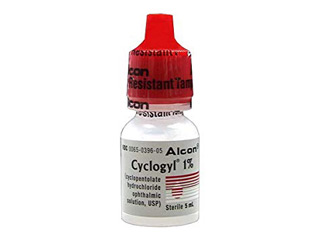
Cyclogyl (Cyclopentolate) – Product Information and Patient Guide for Australia
Basic Product Information
| Generic Name (INN) | Cyclopentolate |
|---|---|
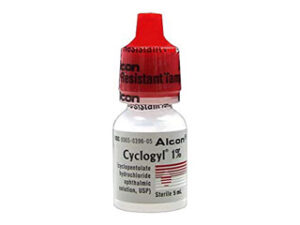
| Brand Names in Australia | Cyclogyl®, Minims® Cyclopentolate, among others |
| ATC Code | S01FA04 (Ophthalmologicals – Mydriatics and cycloplegics) |
| Available Forms & Strengths | Eye Drops: 0.5%, 1%, 2% Single-dose (Minims) and multi-dose bottles |
| Manufacturers (AU) | Alcon Bausch & Lomb Aspen Pharmacare Various generic suppliers |
| Prescription Status | Prescription Only Medicine (Schedule 4, S4) |
Mechanism of Action
Simple Explanation: Cyclogyl (cyclopentolate) works by temporarily relaxing certain muscles in your eye. This causes the pupil to widen (dilate) and the lens to temporarily lose its ability to focus (cycloplegia). This helps eye doctors check the back of your eye more easily or perform certain tests and treatments.
Specialist View: Cyclopentolate is an antimuscarinic agent. It binds and blocks muscarinic receptors in the iris sphincter muscle and ciliary body, resulting in mydriasis and cycloplegia. Its duration of action is intermediate when compared to tropicamide (shorter) or atropine (longer).
Pharmacokinetics
- Absorption: Primarily absorbed via conjunctival and nasal mucosa when applied topically to the eye. Systemic absorption is minimal but possible, especially in children.
- Metabolism: Undergoes hepatic metabolism to inactive metabolites.
- Elimination: Mainly excreted by the kidneys.
- Onset and Duration: Mydriatic effect begins in 15–60 minutes; cycloplegic effect takes 25–75 minutes. Both effects usually wear off within 6–24 hours, though some sensitive patients may experience blurring for up to 48 hours.
Use in Everyday Life and Best Practices
- Typical Doses:
- Adults: 1–2 drops of 1% solution in each eye as needed (see indications).
- Paediatrics: Usually 0.5% or 1% drops; dosing and number of applications must be guided by an optometrist or ophthalmologist.
- How to Use:
- Wash your hands well before and after using the drops.
- Lean your head back, gently pull down the lower eyelid, and instil the prescribed number of drops into the pocket without touching your eye or eyelashes with the dropper tip.
- Close your eyes and gently press the inner corner of the eye for 1–2 minutes to reduce systemic absorption.
- Do not drive, use machinery, or perform hazardous tasks until the blurring disappears.
- Sunglasses may help reduce glare and sensitivity to light after use.
- Storage: Keep at room temperature, away from heat and direct sunlight. Multi-dose bottles should be discarded 28 days after opening. Minims (single-dose units) should be discarded immediately after use.
Dosing in the Morning vs Evening
- Morning: Preferable for most eye examinations or procedures, as effects will subside by evening.
- Evening: May prolong visual disturbances overnight. Used rarely unless advised by a doctor (e.g., for therapeutic cycloplegia in children).
- Tips: Always follow the timing recommended by your eye specialist. Try to schedule use so that vision is least disrupted for work or school.
Taking With Food or on an Empty Stomach
- Cyclogyl drops are for topical (eye) use only — they are not affected by meals or stomach contents.
- Because the drops are not taken by mouth, there are no known interactions with typical foods in an Australian diet.
- Ensure proper use after washing hands, regardless of recent food intake.
Interaction Warnings
| Substance/Drug | Potential Interaction | Advice |
|---|---|---|
| Other Anticholinergic Medications (e.g., atropine, antihistamines, some antidepressants) | Increased systemic anticholinergic effects (dry mouth, confusion, flushing) | Inform your doctor/pharmacist of all medicines used |
| Contact Lenses | May interact with preservatives in drops; may cause discomfort | Remove lenses before use, wait at least 15 mins before reinserting |
| Alcohol | No direct interaction, but both can cause drowsiness or confusion in sensitive persons | Avoid heavy alcohol shortly before or after use |
| Glaucoma Medications | Pupil dilation may affect intraocular pressure | Consult your specialist if you have any type of glaucoma |
Indications
| Indication | Status | Notes |
|---|---|---|
| Pupil dilation for eye examination | Approved | Used before fundoscopy, refraction, or retina exams |
| Cycloplegia for refraction studies | Approved | Commonly used in children and young adults |
| Pre/post ophthalmic surgery | Approved | As directed by eye specialist |
| Anterior uveitis (to prevent synechiae) | Approved | Often combined with steroids |
| Off-label: Myopia management | Limited Evidence | Alternatives preferred; consult a paediatric ophthalmologist |
Dosing According to Clinical Indication
| Indication | Adults | Paediatric (6–12 years) | Elderly |
|---|---|---|---|
| Routine pupil dilation | 1–2 drops 1% in each eye, repeat in 5–10 mins if necessary | 1 drop 0.5–1%, repeat after 5–10 mins if needed | As for adults, use cautiously in frail patients |
| Cycloplegia for refraction | 1–2 drops 1%, repeat in 5 mins if needed | 1 drop 0.5% or 1%, repeat after 5–10 mins | As above |
| Anterior uveitis (anti-synechiae) | 1 drop 1% two to three times daily | 1 drop 0.5–1% two to three times daily | Use lowest effective dose |
Note: Never exceed your prescriber's instructions. Children and elderly are at higher risk of side effects.
Safety Profile and Side Effects
| Type | Description | Frequency |
|---|---|---|
| Blurred vision | Temporary inability to focus near objects | Very common |
| Light sensitivity | Pupil dilation increases glare | Common |
| Stinging on instillation | Mild, brief discomfort in the eye | Common |
| Allergic reaction | Redness, swelling, itching, rash | Uncommon |
| Increased intraocular pressure | May trigger glaucoma attack (esp. narrow angle) | Rare |
| Systemic anticholinergic effects | Dry mouth, flushing, confusion, rapid heartbeat (esp. in children/elderly) | Rare but serious |
Warnings:
- Do not use in people with known allergy to cyclopentolate or any excipients.
- Inform your doctor if you have glaucoma or risk factors for high intraocular pressure.
- Extra care required in infants, children, the elderly, and people with neurological conditions.
- Never ingest or allow the drops to be used in the ears, mouth, or skin wounds.
Guidelines for Proper Use (Australia Context)
- Always follow the instructions given by your optometrist, ophthalmologist, or pharmacist.
- Keep the dropper or tip sterile—do not allow it to touch your eye, hands, or any other surface.
- Report any severe pain, loss of vision, or persistent redness to your eye specialist immediately.
- Cyclogyl is not for long-term or routine home use unless specifically prescribed for continuous therapy.
- Store all medicines away from children.
- If using other eye medicines, separate administration by at least 5 minutes to avoid washout.
- Dispose of expired products with a community pharmacy disposal service.
Alternative Treatment Options in Australia
- Tropicamide (Mydriacyl®): Quicker onset, shorter duration; often preferred for brief diagnostic pupil dilation.
- Atropine: Longer-lasting effects, used mainly for inflammation or myopia control in children, but higher risk of side effects.
- Homatropine: Intermediate duration; less commonly used in Australia.
- Phenylephrine: Purely mydriatic (does not paralyse accommodation); often combined with cyclopentolate or tropicamide for exams.
Many comparable agents are available on the PBS (Pharmaceutical Benefits Scheme) for eye care in Australia. Your doctor will choose the best option based on your age, health, purpose of use, and risk of side effects.
Legal, Registration, and Reimbursement Status in Australia
- Cyclogyl (cyclopentolate) is registered for use with the Therapeutic Goods Administration (TGA).
- Available under prescription from optometrists, GPs, and ophthalmologists under the Schedule 4 (Prescription Only) classification.
- Some forms are listed on the Pharmaceutical Benefits Scheme (PBS) for eligible indications, mostly in hospital or specialist settings.
- May be subsidised on the PBS for select uses. Private script costs will vary if used outside PBS indications.
- Not a controlled drug. Not for self-medication or OTC supply.
Latest Research and Clinical Guidelines (2022–2025)
- Australian and New Zealand College of Ophthalmologists (RANZCO) guidance (2023): Cyclopentolate remains the preferred agent for paediatric refraction and mydriasis in most settings due to its efficacy and intermediate duration (RANZCO).
- Recent reviews highlight the need to individualise dosing for infants and to minimise the risk of systemic exposure and toxicity (J Paediatr Child Health, 2023).
- Coadministration with phenylephrine is standard practice for optimal dilation in adult retinal assessments (Eye, 2024).
- Rare but serious CNS effects in infants underscore the importance of correct dosing and nasolacrimal occlusion (Aust Prescriber, 2022).
- Ongoing research is comparing cyclopentolate vs atropine for long-term myopia control; cyclopentolate has faster recovery of vision (Ophthalmology, 2025).
Availability and Delivery in Australia
| Pack/Strength | Brand Example | Typical Price (private script) | Delivery Estimate (business days) |
|---|---|---|---|
| 1% 15 mL bottle | Cyclogyl® | A$15–25 | Sydney: 1–2 Melbourne: 1–2 Brisbane: 2–3 Adelaide: 2–3 Perth: 3–5 |
| 0.5% 0.5 mL Minims® (20 x units) | Minims® Cyclopentolate | A$25–40 | Major cities: 2–4 Rural/remote: 3–7 |
| 2% 10 mL bottle | Generic | A$18–30 | Eastern states: 2–3 Remote: up to 7 |
Prices can vary between pharmacies and are subject to prescription and dispensing fees. Always check with your regular pharmacy for updated costs and stock information.
FAQ – Most Common Patient Questions
- How long will my vision be blurry after using Cyclogyl?
Most people experience blurred near vision and light sensitivity for 6–24 hours, although some may take up to 48 hours. Do not drive or operate machinery until your vision clears. - Can I use Cyclogyl if I wear contact lenses?
Remove contact lenses before use, and wait at least 15 minutes after applying the drops before reinserting them to avoid irritation. Preservatives can interact with the lenses. - Are there safer alternatives if I am sensitive to Cyclogyl?
Yes—your specialist may consider tropicamide (shorter acting) or phenylephrine (does not affect focusing) depending on your needs and allergy history. - Can Cyclogyl be used in children?
Yes, but dosing must be adjusted for age and weight. Children are more sensitive to side effects, so paediatric dosing and direct supervision by an eye specialist are essential. - Is Cyclogyl covered by Medicare or private health insurance?
Some forms and indications may be covered by the PBS. Private insurance may subsidise costs in hospital or specialist care; discuss with your prescriber or pharmacist.
Always follow your prescriber’s or pharmacist’s advice. Call your doctor if you are concerned about side effects or experience any eye pain, vision loss, or severe discomfort after using Cyclogyl.
Information current as of June 2024. For the most up-to-date guidance, consult your local pharmacist or healthcare provider.