Cyclopentolate: Medicine Information for Australian Patients
Basic Product Information
| International Nonproprietary Name (INN) | Cyclopentolate |
|---|---|
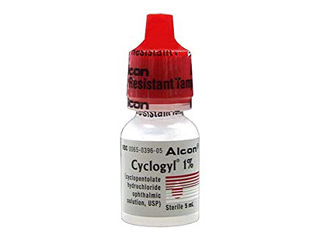
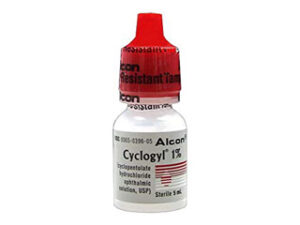
| Australia Brand Names | Minims Cyclopentolate, Cyclogyl, Mydrilate |
| Australian Registration (AUST R Numbers) | Check via TGA Database |
| ATC Code | S01FA04 |
| Available Forms & Strengths | Eye drops: 0.5%, 1%, 2% |
| Manufacturers | Bausch & Lomb, Alcon Laboratories, S.A., Aspen Pharmacare |
| Prescription Status | Prescription Only (S4) |
Mechanism of Action
Cyclopentolate belongs to a group of medicines known as anticholinergics, specifically used as eye drops (ophthalmic use). In simple terms, it works by temporarily relaxing the muscles in the eye that help control pupil size and focusing. This causes the pupil to widen (dilate) and slows the eye's ability to focus (cycloplegia).
For specialists: Cyclopentolate is a non-selective muscarinic acetylcholine receptor antagonist. When instilled into the eye, it blocks the parasympathetic stimulation of the iris sphincter and ciliary muscle, leading to mydriasis and cycloplegia. Onset and duration are dose-dependent.
Pharmacokinetics
- Absorption: Primarily local ocular absorption. Small amounts may be absorbed systemically via conjunctiva and nasal mucosa.
- Metabolism: Rapidly metabolised in the eye and liver, minimal systemic bioavailability in recommended doses.
- Elimination: Excreted via urine; systemic elimination half-life is short (2–3 hours).
- Duration of Action: Pupil dilation typically lasts 24 hours; accommodation impairment for 6–24 hours (up to 48 hours, especially in children).
Use in Everyday Life and Best Practices
Cyclopentolate is primarily prescribed and administered in clinical settings during eye examinations, especially in children, to allow eye healthcare professionals to get an accurate view of the inside of the eye. It may also be used in the diagnosis and management of some inflammatory eye conditions.
- Typical Dose: 1–2 drops in the affected eye(s), 5–15 minutes before examination. For children, lower concentrations (0.5%) are preferred.
- How to Use: Wash hands thoroughly. Tilt your head back, gently pull down the lower eyelid, and squeeze in prescribed drops.
- Do not touch the dropper tip to the eye or any surface to prevent contamination.
- Press finger gently against the corner of the eye (near the nose) for 1–2 minutes after instillation to reduce systemic absorption.
- English/Australian Context: Most often used by optometrists or ophthalmologists during routine childhood vision screening, refraction tests, and hospital clinics across Australia.
Dosing in the Morning vs Evening
Cyclopentolate is typically administered during daytime appointments at clinics or hospitals due to its temporary vision-disturbing effects.
- Morning dosing: Preferred for routine exams to avoid night-time vision difficulty. Most people recover by bedtime.
- Evening dosing: Rarely used, as impaired vision may interfere with daily activities and increase injury risk.
- Regularity: Since it is mainly used for one-off diagnostic occasions, consistent daily dosing is not needed.
- Plan for someone to accompany you, especially after morning/midday appointments, as your vision may be blurry for several hours.
Taking with Food or an Empty Stomach
Cyclopentolate eye drops are not affected by meals, as they are not taken by mouth. You can eat and drink normally (including standard Australian meals) before and after administration.
Interaction Warnings
| Interaction | Advice |
|---|---|
| Other eye medicines | Avoid using other eye drops/ointments at the same time unless advised by your doctor, as they may interact or dilute effectiveness. |
| Antihistamines, tricyclic antidepressants | May increase anticholinergic side effects; use with caution. |
| Alcohol | No significant direct interaction, but alcohol may worsen blurred vision or drowsiness. |
| Pregnancy & Breastfeeding | Use only if prescribed. Discuss risks and benefits with your doctor (Category B2). |
| Medical Conditions | Inform your doctor if you have glaucoma, Down syndrome, epilepsy, or heart conditions. |
Indications
| Official Indications | Off-label Uses |
|---|---|
|
|
Dosing According to Clinical Indication
| Population | Indication | Dose (Strength) | Comments |
|---|---|---|---|
| Adults | Mydriasis/cycloplegia | 1 drop of 1% solution; may repeat in 5–10 minutes if necessary | Maximum: 2 drops per eye |
| Children (over 3 months) | Mydriasis/cycloplegia | 1 drop of 0.5% solution; may repeat after 5–10 minutes | Younger or lighter children: use minimum dose |
| Elderly | As above | 1 drop of 0.5–1% solution | Monitor for higher systemic sensitivity |
| Children (under 3 months) | Specialist direction only | Individual risk–benefit; consult paediatric ophthalmologist | Use with extreme caution |
Safety Profile and Side Effects
| Common Side Effects | Rare/Serious/Requiring Medical Attention |
|---|---|
|
|
- Warnings: Extra caution is needed in young children, elderly people, and people with Down syndrome, epilepsy, hypersensitivity to anticholinergics, or known narrow-angle glaucoma.
- If you wear contact lenses, they should be removed before application and not reinserted until the effects wear off.
Guidelines for Proper Use: Pharmacist and Clinic Advice for Australians
- Bring sunglasses for your appointment, as your eyes may be sensitive to light for several hours after treatment.
- Avoid driving, bike riding, or operating machinery until vision and focus have fully returned to normal.
- Arrange for transport or ask someone to accompany you, especially after morning clinics.
- Follow your doctor's or pharmacist’s specific instructions exceptionally closely for children and the elderly.
- Report any severe or unexpected side effects to your local GP or eye care professional immediately.
- For home use (rare in Australia), store the bottle at room temperature and keep out of children’s reach.
Alternative Treatment Options (PBS Reimbursed in Australia)
- Tropicamide (Mydriacyl)
- Quicker onset/shorter duration. Preferred for adults needing fast, temporary pupil dilation for examination.
- Atropine sulphate
- Longer-acting, used less commonly due to longer recovery times. May be preferred for prolonged cycloplegia (e.g. some cases of amblyopia therapy).
- Homatropine hydrobromide
- Intermediate duration. Not widely available in Australia.
Comparison:
Cyclopentolate is often the preferred option in paediatric clinics due to its moderate duration and reliable cycloplegic effect. Tropicamide is more convenient for quick adult exams. Atropine is reserved for particular therapeutic indications.
Legal, Registration, and Reimbursement Status in Australia
- Registered with the Therapeutic Goods Administration (TGA) as a prescription-only medicine (Schedule 4).
- Available on script from optometrists, ophthalmologists, and GPs with appropriate indication.
- Subsidised under the Pharmaceutical Benefits Scheme (PBS) for specific uses (check current PBS Schedule).
- Dispensed with counselling from a community pharmacy or supplied during specialist eye clinic visits.
- Not available for over-the-counter purchase.
Latest Research and Clinical Guidance (2022–2025)
- Australian and international guidelines (RANZCO, NICE, AAO) continue to support cyclopentolate as the main agent for cycloplegic refraction in children and for mydriatic examination in routine and specialist eye care settings.
- Recent systematic reviews (Clinical Ophthalmology, 2023; British Journal of Ophthalmology, 2024) confirm cyclopentolate 1% is safe and effective for children over 3 months, but recommend close monitoring of at-risk populations.
- Ongoing reports recommend reducing dose in lighter or younger children to minimise rare but significant side effects.
- Queensland Health (2024) recommends extra caution in infants and supports use of punctal occlusion (pressing tear ducts) to reduce systemic absorption.
Availability and Delivery
| Pack Size | Approximate Price (AUD) | Major City Delivery Estimate |
|---|---|---|
| Minims (single-dose) 0.5%, 1% x 20 units | $15–25 | Sydney: 1–2 days Melbourne: 1–2 days Brisbane: 1–3 days Perth/Adelaide: 2–4 days |
| Bottle 5mL 1% | $10–20 | As above (subject to pharmacy delivery options) |
- Supplied by hospital and specialist clinics or on pharmacy prescription delivery services.
- Not all pharmacies may stock all formulations—check availability before your appointment.
- No home delivery for hospital-only supplied formulations.
Frequently Asked Questions (FAQ)
- Q: How long will my vision be blurry after cyclopentolate eye drops?
A: For most people, effects last between 6 and 24 hours. Children and lighter individuals may notice longer effects (up to 48 hours). Wearing sunglasses helps while effects persist. - Q: Is it safe for babies and young children?
A: When used by a trained eye care professional and in the correct dose, cyclopentolate is considered safe for babies over 3 months, though extra caution is taken. Parents should monitor for any unusual behaviour, fever, or rash and report to a doctor immediately. - Q: Can I drive after using cyclopentolate?
A: Not until your vision and focus have fully returned to normal. Arrange alternative transport for your appointment day. - Q: What should I do if I have an allergic reaction?
A: If you notice swelling, rash, severe redness, breathing difficulties, or confusion, seek urgent medical attention (call 000 if severe). - Q: Can I use my regular eye medicines with cyclopentolate?
A: Discuss all current medicines with your doctor or pharmacist. Some combinations (e.g., multiple anticholinergics) may increase side effects or reduce effectiveness.
Further Information and Support
Please consult your community pharmacist, optometrist, or ophthalmologist for personalised advice. For medicine safety information, visit the NPS MedicineWise and the Therapeutic Goods Administration websites.