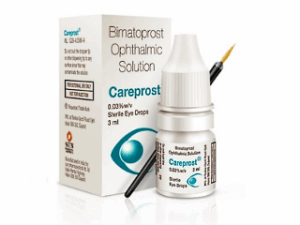
Careprost (Bimatoprost): Comprehensive Patient Information for Australia
Basic Product Information
| International Nonproprietary Name (INN) | Bimatoprost |
|---|---|
| Australia Brand Names | Careprost, Lumigan, Bimatoprost Sandoz |
| ATC code | S01EE03 |
| Available Forms and Strengths | Ophthalmic solution (eye drops): 0.03% (0.3 mg/mL) |
| Manufacturers | Sun Pharmaceutical Industries, Allergan Australia Pty Ltd, Sandoz Pty Ltd |
| Prescription Status | Prescription Only Medicine (Schedule 4, S4) in Australia |
What is Careprost (Bimatoprost)?
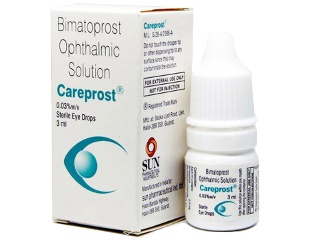
Careprost is an ophthalmic (eye) solution containing bimatoprost, a prostaglandin analog. It is primarily used to lower elevated intraocular pressure (IOP) in adults with open-angle glaucoma or ocular hypertension, helping reduce the risk of vision loss. In Australia, Careprost is also popular for its off-label use to treat hypotrichosis of the eyelashes (insufficient eyelashes), stimulating growth, length, and thickness. Its safety and effectiveness have been established in these indications by the Therapeutic Goods Administration (TGA).
Mechanism of Action
- For Patients: Bimatoprost works by increasing the outflow of fluid (aqueous humour) from the eye, which lowers eye pressure and helps prevent optic nerve damage.
- For Clinicians: Bimatoprost is a structural analogue of prostaglandin F2α. It primarily acts on prostamide-sensitive receptors in the trabecular meshwork and uveoscleral pathways, enhancing aqueous humour outflow, thus effectively reducing intraocular pressure.
Pharmacokinetics
- Absorption: Systemic absorption after ocular administration is minimal; peak plasma concentrations occur within 10 minutes, decline to undetectable within 1.5 hours.
- Metabolism: Extensively metabolised in the liver via oxidation, N-deethylation, and glucuronidation pathways.
- Elimination: Primarily excreted via urine (67%), small proportion in faeces.
- Duration of Action: Once-daily dosing achieves sustained reduction in IOP; effects persist for 24 hours.
Use in Everyday Life and Best Practices
- Indications: Open-angle glaucoma, ocular hypertension, eyelash hypotrichosis (off-label).
- How to Use: Instil one drop of Careprost into the affected eye(s) once daily, usually in the evening. If using for eyelashes, apply a single drop to the upper eyelid margin with a sterile applicator.
- Do not exceed recommended dosage—more frequent use can reduce effectiveness and increase risks.
- Remove contact lenses before applying and wait at least 15 minutes before reinsertion, as preservatives can affect contact lens material.
- Wash hands and ensure the dropper does not touch any surface or the eye to prevent contamination.
- Follow your pharmacist or optometrist's directions closely.
Dosing: Morning vs Evening
- Evening Dosing (Preferred): Studies suggest bimatoprost is more effective when used in the evening, as IOP tends to peak overnight.
- Morning Dosing: Acceptable if it aids adherence; less optimal but may suit patient routine.
- Tips for Regularity: Choose a consistent time daily; set a phone reminder or place the product with other routine medications.
- Missed Dose: Apply as soon as remembered, unless it is almost time for the next dose. Do not double up.
Taking with Food or on an Empty Stomach
- Careprost is applied directly to the eyes or eyelids and is not affected by food or drink consumption.
- No known interactions with typical English or Australian dietary habits (e.g., tea, coffee, dairy, or “meat and three veg”).
Interaction Warnings
| Interaction With | Effect | Recommendation |
|---|---|---|
| Other Eye Drops (esp. PG analogues) | May reduce overall effectiveness, increase risk of eye irritation | Separate doses by at least 5 minutes; avoid multiple PG-analogues unless advised by specialist |
| Contact Lenses | Preservative (BAK) can stain or degrade materials | Remove before application, wait 15 minutes before reinsertion |
| Alcohol | No direct interaction | No restriction, but avoid excess to support overall health |
| Antihypertensive Medicines | Potential additive effect on blood pressure | Monitor, discuss with prescriber if unusual symptoms arise |
| Ophthalmic Corticosteroids | Potential for blunted IOP-lowering effect | Combination use should be monitored by specialist |
Indications
| Indication | TGA-Approved | Off-Label/Other |
|---|---|---|
| Open-angle glaucoma | ✔ | |
| Ocular hypertension | ✔ | |
| Eyelash hypotrichosis | ✔ (off-label in Australia, TGA-approved for some brands overseas) |
Dosing According to Clinical Indications
| Patient Group | Indication | Recommended Dose | Comments |
|---|---|---|---|
| Adults | Glaucoma/Ocular Hypertension | 1 drop in affected eye(s) once daily (evening preferred) | Do not exceed once-daily use |
| Adults | Eyelash Hypotrichosis (off-label) | 1 drop on upper eyelid margin, once daily | Use sterile applicator, avoid contact with lower eyelid |
| Children | Not recommended (<18 years) | – | Safety not established |
| Elderly | Same as adults | – | No dosage adjustment needed |
Safety Profile and Side Effects
- Common: Eye redness, itchiness, dry eye, darkening of the eyelid skin, changes in eyelash colour or thickness, temporary blurring of vision, foreign body sensation.
- Less Common: Eye irritation, sensitivity to light, eye discharge, burning sensation.
- Rare but Serious: Eye pain, vision changes, severe allergic reactions, darkening of iris colour (permanent), macular oedema (esp. in patients with risk factors).
- Warnings: Do not use if you have known hypersensitivity to bimatoprost or similar drugs. Avoid in patients with history of uveitis or macular oedema without specialist review. Not intended for use in children unless prescribed by a paediatric ophthalmologist.
Guidelines for Proper Use (Australia Practice)
- Remove makeup and contact lenses prior to use.
- Wash hands thoroughly before handling bottle or applicator.
- When using for glaucoma, tilt head back, gently pull down lower eyelid, and instil one drop into the conjunctival sac.
- When using for eyelashes, apply only to upper eyelid margin using a sterile, single-use applicator.
- Do not reuse applicators; discard after each use.
- Use caution not to allow tip of dropper or applicator to touch any surface, including your eye.
- Blot excess solution to minimise transfer to lower lid or cheeks.
- If using other eye medications, space at least 5 minutes apart.
- Store below 25°C; avoid direct sunlight. Discard bottle 4 weeks after opening.
- Report any persistent eye pain, vision changes, or signs of infection promptly to your pharmacist or doctor.
Alternative Treatment Options
- Latanoprost (Xalatan, various generics): Prostaglandin analog, similar effectiveness; reimbursed by the PBS. Often preferred as first-line due to wide experience and tolerability.
- Travoprost (Travatan): Alternative prostaglandin analog; similar efficacy and dosing schedule.
- Tafluprost (Saflutan): Preservative-free formulation for those sensitive to preservatives; slightly more expensive.
- Beta-blocker drops (Timolol): Effective, but may not be suitable for those with asthma or some heart conditions.
- Brimonidine, Dorzolamide, Carbonic Anhydrase Inhibitors: Usually used if prostaglandin analogues are inadequate or not tolerated.
Pros & Cons: Prostaglandin analogs such as bimatoprost and latanoprost offer once-daily dosing, excellent efficacy, and good tolerability. Non-prostaglandin options often require multiple daily doses and have a different side effect profile. Many of these options are listed on the Pharmaceutical Benefits Scheme (PBS), so speak to your doctor or pharmacist for the best choice for you.
Legal, Registration, and Reimbursement Status in Australia
- Careprost and other bimatoprost eye drops are regulated by the TGA (Therapeutic Goods Administration).
- Prescription-only (Schedule 4 medicine): requires a doctor's prescription in Australia.
- Bimatoprost (e.g. Lumigan) for glaucoma/ocular hypertension is reimbursed under the PBS; off-label cosmetic use for eyelashes is not covered.
- Import and use of Careprost for eyelash enhancement in the absence of a prescription is not legal in Australia.
- Always obtain from a registered Australian pharmacy to ensure product quality and legal compliance.
Latest Research and Clinical Guidance (2022–2025)
- 2023 update from the Royal Australian and New Zealand College of Ophthalmologists (RANZCO) confirms prostaglandin analogues (including bimatoprost) as first-line for open-angle glaucoma due to excellent efficacy-to-safety ratio.
- Recent meta-analyses (J Glaucoma 2023; Cochrane Database 2022) show bimatoprost provides slightly greater IOP reduction compared to alternative prostaglandin analogues, though may cause more local side effects (e.g. redness).
- 2024 international consensus (World Glaucoma Association): Evening dosing provides optimal pressure reduction; safety in elderly and diverse populations remains high.
- No robust new evidence on long-term safety of bimatoprost for cosmetic use on eyelashes, but it remains widely prescribed off-label, with pigmentary side effects considered the main concern.
Availability and Delivery
| Pack Size | Typical Use Duration* | Indicative Price (AUD) | Availability in Pharmacy |
|---|---|---|---|
| 3 mL bottle | 4–6 weeks | $30–$40 (private) | Widely available |
| 5 mL bottle | 6–8 weeks | $45–$60 (private) | Major city & online pharmacies |
*Actual duration depends on prescribed dosing and usage.
| City | Estimated Delivery (Standard) |
|---|---|
| Sydney | 1 business day |
| Melbourne | 1–2 business days |
| Brisbane | 1–2 business days |
| Perth | 2–4 business days |
| Adelaide | 1–2 business days |
| Regional Australia | 2–5 business days |
Frequently Asked Questions (FAQ)
1. Can I use Careprost for my eyelashes without a prescription in Australia?
No. In Australia, Careprost (bimatoprost) is a prescription medicine. It is legal to use with a valid prescription for eye conditions or after consultation for cosmetic uses. Importing without a prescription or using without medical advice is not permitted.
2. What should I do if I accidentally use more than the recommended dose?
Do not use more than one drop per eye per day. Using more does not improve results and may increase side effects. If accidentally overdosed, simply return to your normal dosing schedule at the next application. If you develop severe eye pain or vision changes, seek urgent medical advice.
3. Will Careprost change my eye or eyelid colour?
Careprost may cause gradual pigmentation of the iris (especially in lighter-coloured eyes) and of the eyelid skin. These changes can be permanent and may not affect both eyes equally. If noticed, discuss with your doctor or pharmacist for ongoing monitoring.
4. Can I use Careprost if I have other eye conditions?
Inform your doctor if you have a history of uveitis, macular oedema, or previous eye surgery, as bimatoprost may not be suitable without closer specialist monitoring.
5. How long does it take for results when using Careprost for eyelash growth?
When used as directed, most people begin to see noticeable eyelash changes after 4–8 weeks. Maximum results are seen in up to 16 weeks. Consistent, correct application is essential.