

Capecitabine: Patient-Friendly Guide for Australia
Basic Product Information
| International Non-Proprietary Name (INN) | Capecitabine |
|---|---|
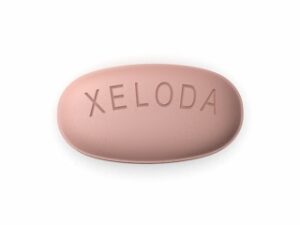
| Australian Brand Names | Xeloda®, Capecitabine Sandoz®, Capecitabine Mylan® |
| ATC Code | L01BC06 |
| Available Forms & Strengths | Film-coated tablets: 150 mg, 500 mg |
| Manufacturers | Roche Products Pty Limited, Sandoz Pty Ltd, Mylan Health Pty Ltd |
| Prescription Status in Australia | Schedule 4 – Prescription Only Medicine |
Mechanism of Action
For patients: Capecitabine is a type of chemotherapy that fights cancer by stopping the growth and spread of cancer cells. Once swallowed, your body converts capecitabine into a substance similar to an older chemotherapy drug called 5-fluorouracil (5-FU), but this mostly happens inside the tumour itself. This means more targeted action and potentially fewer side effects.
For specialists: Capecitabine is an oral prodrug of 5-fluorouracil. It requires a three-step enzymatic conversion, with the final enzymatic step – catalysed by thymidine phosphorylase – occurring predominantly in tumour tissue. This targeted activation helps enhance the cytotoxic selectivity towards tumour cells by inhibiting thymidylate synthase, thereby interfering with DNA synthesis and function.
Pharmacokinetics
- Absorption: Rapidly absorbed in the GI tract after oral administration.
- Metabolism: Extensively metabolised first in the liver (to 5’-DFCR and 5’-DFUR) and then mainly within tumour tissue to form 5-FU.
- Elimination: Excreted primarily via urine (almost 95%), minor excretion via faeces.
- Time to maximum concentration (Tmax): 1.5 hours post-dose for capecitabine, 2 hours for 5-FU.
- Half-life: Approximately 0.75 hours (capecitabine) and 0.5 hours (5-FU).
- Duration of action: Sustained anticancer effect due to intracellular prodrug activation.
Use in Everyday Life and Best Practices
Capecitabine is most often given as part of planned cycles, such as 2 weeks of treatment followed by 1 week of rest (e.g., “14 days on, 7 days off”) as directed by your oncologist. Tablets are typically taken twice per day, around 12 hours apart, and at the same times each day to maintain even medicine levels in the body.
- Always swallow whole with water—do not crush, split, or chew tablets.
- Wash hands thoroughly after handling tablets, even if they are whole and intact.
- Store capecitabine in a cool, dry place below 30°C, away from children.
- Follow your doctor's instructions exactly—do not change the dose or schedule unless told to do so.
- If you miss a dose, do not double your next dose; contact your doctor for advice.
Dosing in the Morning vs Evening
Capecitabine is prescribed to be taken every 12 hours. Most patients are advised to take one dose in the morning (after breakfast) and one in the evening (after your evening meal). This routine best fits typical Australian meal times and helps patients remember both doses.
- Advantages: Spacing doses prevents medicine peaks and troughs, reducing side effect risk.
- Disadvantages: Taking doses at irregular times, or missing doses, may increase side effects or make the treatment less effective.
- Tip: Set reminders or use a dose diary to encourage regularity.
Taking With Food or on an Empty Stomach
In Australia, capecitabine should always be taken within 30 minutes after a meal. Taking the medicine with food helps your body absorb the right amount and can reduce gastrointestinal side effects such as nausea and stomach pain. Try to maintain a consistent food type and amount at each dose, following traditional balanced Australian diets.
Interaction Warnings
| Item | Possible Interaction | Advice |
|---|---|---|
| Food | Fatty meals may reduce absorption; always take shortly after a regular meal. | Stay consistent with meal timing and content. |
| Alcohol | No direct interaction, but can worsen side effects (nausea, dehydration). | Best to limit/restrict alcohol during treatment. |
| Antacids | May mildly increase capecitabine blood levels. | Monitor for increased side effects, inform your doctor if you take antacids regularly. |
| Blood-thinners (e.g., warfarin) | Can increase bleeding risk. | Frequent blood test monitoring; inform your oncologist and GP. |
| Phenytoin | Capecitabine may increase phenytoin levels, causing toxicity. | Phenytoin levels and toxicity signs should be checked regularly. |
| Interferon-alpha | May increase side effects of capecitabine. | May need dose adjustments; seek advice from your specialist. |
| Live vaccines (e.g., yellow fever) | Increased risk of severe infection due to weakened immune system. | Avoid live vaccines during therapy. |
Indications
| Indication | Use in Australia |
|---|---|
| Colorectal Cancer | Adjuvant and metastatic disease (alone or in combination with other chemotherapy) |
| Breast Cancer | Locally advanced or metastatic, usually after failure of docetaxel or anthracyclines |
| Gastric (Stomach) Cancer | Metastatic or locally advanced (off-label or as part of a clinical trial) |
| Other GI Cancers (off-label/protocol) | Pancreatic and oesophageal cancers in specific protocols |
Dosing According to Clinical Indications
| Population | Indication | Typical Dose (per m² body surface) | Schedule | Max Duration/Cycles |
|---|---|---|---|---|
| Adults | Colorectal, breast | 1250 mg/m² every 12 hours | Days 1-14 every 21-day cycle | Until disease progression or planned cycles completed |
| Adults (Combo) | With platinum-based chemo | 1000 mg/m² every 12 hours | Days 1–14 each 21-day cycle | Schedule varies by protocol |
| Elderly (>65 years) | All indications | Start at 1000 mg/m² every 12 hours | May be lower if frail or comorbid | Monitor closely |
| Children | Not recommended | Safety and efficacy not established | — | — |
| Hepatic/Kidney impairment | All indications | May require dose reduction | As directed by oncologist | Regular monitoring needed |
Safety Profile and Side Effects
- Common:
- Diarrhoea
- Nausea, vomiting
- Hand-foot syndrome (redness, swelling, pain of palms/soles)
- Lethargy/fatigue
- Loss of appetite
- Mouth sores
- Less common/serious:
- Fever or signs of infection
- Severe stomach pain or persistent diarrhoea
- Chest pain or shortness of breath
- Yellowing of skin or eyes (jaundice)
- Blood in stools or vomiting
- Rare:
- Serious skin reactions
- Severe allergic reactions (anaphylaxis)
- Severe bone marrow suppression
Always report persistent vomiting, diarrhoea, fever, mouth sores, or any bruising/bleeding to your doctor or cancer nurse as soon as possible.
Guidelines for Proper Use and Practical Tips
- Take doses after food (within 30 minutes), morning and evening.
- Wash hands with soap and water before and after handling tablets.
- Use gloves if giving the medicine to someone else or helping with administration.
- Avoid anyone with infectious diseases or symptoms while on chemotherapy.
- Wear sunscreen, a wide-brimmed hat, and protective clothes outdoors as capecitabine may make your skin more sensitive to sunlight (follow local Australian sun safety guidelines).
- Inform all your healthcare providers (GP, dentist, pharmacist) that you are taking capecitabine, especially before dental or surgical procedures.
- If you vomit after a dose—do not take an extra dose. Let your care team know and follow their instructions.
Alternative Treatment Options
- Intravenous 5-Fluorouracil (5-FU): Gold standard for many GI and breast cancers. Requires hospital visits for infusions; more control over side effects but less convenience.
- Tegafur-uracil: Another oral option available in some regimens, less commonly used.
- Oxaliplatin, irinotecan, docetaxel: Used in combinations for colorectal and breast cancer protocols. Usually IV infusions; different side effect profiles.
- Oral targeted therapies (e.g., lapatinib for breast cancer): Used according to specific mutation or clinical situation.
- Hormonal therapies (breast cancer): Tamoxifen, aromatase inhibitors, various oral options with different side effect profiles, often less toxic than chemotherapy.
Pros of capecitabine: Oral (home use, less disruption), more tumour-targeted activation.
Cons: Must be very regular with dosing, risk of gastro side effects, not suitable for all cancer types or patients with severe liver/kidney problems.
Legal, Registration and Reimbursement Status in Australia
- Registered with: Therapeutic Goods Administration (TGA)
- Legal/Prescription Category: Schedule 4 (S4) – prescription only; only provided by registered pharmacies upon a valid prescription from a specialist doctor (oncologist)}
- Reimbursement: Capecitabine is listed on the Pharmaceutical Benefits Scheme (PBS) for eligible indications, meaning costs are subsidised for approved uses (e.g. colorectal, breast cancer).
- Not covered for off-label uses unless part of a research study or special access program.
Latest Research / Clinical Guidance (2022–2025)
- Clinical guidance: Cancer Council Australia and the eviQ Cancer Treatments Online provide up-to-date dosing and safety protocols. Capecitabine remains first-line for adjuvant colorectal cancer and an important option for breast cancer (source: Cancer Council Australia).
- Recent meta-analyses (2023–2024): Show oral capecitabine as non-inferior to 5-FU in long-term colorectal cancer survival, but with higher risk of hand-foot syndrome (Lancet Oncol, 2023).
- 2023–2024 local studies: Research evaluating shorter/dose-reduced capecitabine regimens are ongoing to improve tolerance in older Australians (JCO Global Oncology 2024).
- Ongoing trial data: Support tailored dosing strategies for elderly and frail patients, and benefit of adding capecitabine to combination regimens in metastatic GI cancers (EORTC, Australian trials network).
Availability & Delivery
| Pack Size | Strength | Brand | Indicative PBS Price* |
|---|---|---|---|
| 60 tablets | 500mg | Xeloda® | $39.50 (PBS subsidised) |
| 60 tablets | 150mg | Sandoz®, Mylan® | $39.50 (PBS subsidised) |
| 120 tablets | 500mg | Xeloda® | $71.50 (PBS subsidised) |
Delivery times to major Australian cities (when ordered with a prescription from most community or hospital pharmacies):
| City | Estimated Delivery Time (in-stock) | Note |
|---|---|---|
| Sydney | Same day – 2 working days | Most common brands are readily available |
| Melbourne | Next day – 2 working days | Special orders may take longer |
| Perth | 2–4 working days | Regional & remote may experience longer delays |
| Brisbane, Adelaide | 1–3 working days | Check stock locally |
| Canberra, Hobart, Darwin | up to 5 working days | Order early to avoid shortages |
*PBS price is for eligible patients, with additional safety net or concessional reductions for those who qualify.
Frequently Asked Questions (FAQ)
- Can I travel while taking capecitabine?
Yes, but always carry enough medicine, your prescription, and a letter from your oncologist. If travelling interstate or overseas, check customs/import rules for oral chemotherapy. Store tablets as directed. - What should I do if I vomit soon after taking a dose?
Do not take an extra dose. Wait for your next scheduled dose and let your healthcare team know. If vomiting is persistent, ask your doctor about anti-nausea medications. - Are there any special foods I must avoid?
No specific foods must be avoided, but always take capecitabine after food. Some patients prefer lighter meals to reduce stomach upset. Avoid grapefruit and Seville orange unless your care team advises; these may rarely interact with some medications. - Do I need special precautions at home?
Wash your hands after handling tablets; keep out of reach of children. Avoid sharing bathrooms or close contact with sick people while on therapy, as your immune system can be weakened. - Can capecitabine affect fertility or pregnancy?
Yes. Capecitabine may harm unborn babies. Women should use reliable contraception during treatment and for at least 6 months after the last dose. Men should also use contraception during treatment and for 3 months after.
For more detailed, personalised advice, always ask your care team, pharmacist, or oncologist.