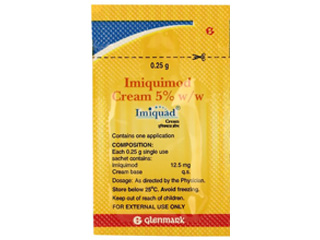
Aldara (Imiquimod): Comprehensive Patient Information for Australia
Basic Product Information
| International Non-Proprietary Name (INN) | Imiquimod |
|---|---|
| Australia Brand Names | Aldara, APO-Imiquimod, Egazimod |
| ATC Code | D06BB10 |
| Available Form & Strengths | Topical Cream, 5% w/w (sachets/tubes) |
| Manufacturers | 3M Health Care, Mylan Australia, Apotex |
| Prescription Status | Schedule 4 (Prescription Only Medicine) |
Mechanism of Action (How Aldara Works)
For Patients: Imiquimod (Aldara) works by stimulating your body’s own immune system to fight abnormal skin cells, viruses, or growths. Rather than directly killing viruses or skin growths, it helps the skin produce natural substances to attack the problem area.
For Healthcare Professionals: Imiquimod is an immune response modifier. It binds to toll-like receptor 7 (TLR7) on dendritic cells and monocytes, inducing proinflammatory cytokines—especially interferon-α (IFN-α), tumour necrosis factor-alpha (TNF-α), and interleukin-12 (IL-12)—which in turn promote the cell-mediated destruction of malignant or HPV-infected cells.
Pharmacokinetics
- Absorption: Minimal systemic absorption through intact skin (≤0.9% of applied dose).
- Metabolism: Imiquimod is metabolised primarily in the liver via oxidation.
- Elimination: The majority is excreted in the urine; some is eliminated via faeces.
- Duration of Action: Local pharmacodynamic effects may persist well after the cream is washed off, as immune stimulation continues for several hours post-application.
Use in Everyday Life and Best Practices in Australia
- Typical Doses:
- Genital warts: Applied three times a week (e.g. Monday, Wednesday, Friday) at bedtime for up to 16 weeks.
- Superficial basal cell carcinoma: Applied 5 times a week for 6 weeks.
- Actinic keratosis: Two to three times weekly for 4 weeks, possibly repeated after a rest period.
- How to Use:
- Wash and dry the affected area before application.
- Apply a thin layer of cream, gently rub in until absorbed.
- Leave on the skin for 6–10 hours (usually overnight).
- Wash off with mild soap and water after the required period.
- Wash hands after application.
- English Context: Australians are often exposed to significant sunlight. If treating sun-damaged skin, strict sun protection is recommended. Discuss skin care, sunscreen use, and follow-up with your pharmacist or GP.
Dosing: Morning vs Evening
- Evening Application (preferred):
- Advantages: Fits best with the required 6–10 hour contact time; less risk of the cream rubbing off; minimal daylight exposure which can cause irritation.
- Recommendations: Apply just before bedtime and wash off in the morning.
- Morning Application:
- Disadvantages: May increase risk of skin irritation from sun exposure; cream may be rubbed off by clothing or daytime activities.
- Tips for Regularity: Choose set days for application; use phone reminders or mark your calendar.
Taking With Food or On an Empty Stomach
Since Aldara is a topical cream, the effectiveness is not affected by food or meals. Australians are not required to make any changes to their diet when applying Aldara. Maintain a healthy, balanced diet as typical in Australia, and focus on proper skin care rather than dietary adjustments.
Interaction Warnings
| Interaction | Recommendation |
|---|---|
| Other Topical Medicines (on same area) | Avoid using other creams or ointments on the treatment area unless prescribed by your GP. |
| Alcohol | No known interaction; however, avoid excessive consumption as it may affect skin health. |
| Immunosuppressive Medications | Consult your doctor as effectiveness of Aldara may be reduced. |
| Systemic Treatments for Skin Conditions (e.g. corticosteroids) | Discuss with your GP or pharmacist. |
| Pregnancy/Breastfeeding | Safety not fully established; use only if clearly needed and prescribed by a doctor. |
Indications
| Indication | Status | Notes |
|---|---|---|
| External genital & perianal warts (condylomata acuminata) | Official (approved by TGA) | Adults (≥18 years) |
| Actinic keratosis (non-hyperkeratotic, non-hypertrophic) | Official (TGA-approved) | On face or scalp |
| Superficial basal cell carcinoma (sBCC) | Official (TGA-approved) | When surgery not appropriate |
| Molluscum contagiosum (children) | Off-label | Unapproved; evidence limited |
Dosing According to Clinical Indications
| Indication | Adult Dose | Pediatric Dose | Elderly Dose |
|---|---|---|---|
| Genital/Perianal Warts | 3x per week (e.g. Mon/Wed/Fri) up to 16 weeks | Not established | Same as adults; increased skin sensitivity possible |
| Actinic Keratosis | 2–3 times per week for 4 weeks | Not established | Same as adults; monitor for irritation |
| Superficial Basal Cell Carcinoma | 5 times per week for 6 weeks | Not recommended | Same as adults; adjust for tolerance |
| Molluscum Contagiosum (off-label) | – | 1–3x per week (under specialist care) | – |
Safety Profile and Side Effects
- Very Common (≥1/10): Redness, swelling, flaking, scabbing, itching, burning, local skin irritation
- Common (≥1/100 and <1/10): Headache, tiredness/malaise, flu-like symptoms, local pain
- Rare (<1/1000): Blistering, ulceration, changes in skin pigmentation, allergic reactions (rash, swelling of lips/face)
- Warnings: Do not apply to broken skin or mucous membranes. Severe irritation—pause treatment and consult your doctor. Small scarring or skin lightening may occur at treated sites. Wash hands thoroughly after application.
Guidelines for Proper Use
- Use only on the area prescribed by your healthcare provider. Avoid eyes, mouth, or nose.
- Wash area with mild, unperfumed soap and water before and after use.
- Do not apply excessive amounts; a thin film is sufficient.
- Protect treated area from direct sunlight; use sunscreen and cover up outdoors.
- Do not use occlusive dressings unless directed by your doctor.
- Do not share sachets or tubes with others.
- Dispose of used sachets carefully (do not flush; place in the bin).
- If severe skin reactions develop, pause use and seek medical advice.
- For young children or elderly, monitor closely for side effects.
Alternative Treatments
- Cryotherapy (freezing): Effective, quick; may require repeat treatments. Can be uncomfortable.
- Topical Podophyllotoxin: Effective for genital warts; less effective for keratoses or BCC.
- 5-Fluorouracil Cream: Used for actinic keratosis; more irritation/erosions possible.
- Surgical Removal: Gold standard for basal cell carcinoma. Complete excision, but leaves scars and needs anaesthesia.
- Photodynamic Therapy: Excellent for some atypical areas; requires specialist facilities.
Pros & Cons Example: Aldara is non-invasive, can be applied at home, and is suitable for multiple lesions but may cause local irritation and takes longer than cryotherapy or surgery.
Legal, Registration, & Reimbursement Status in Australia
- Therapeutic Goods Administration (TGA): Aldara is TGA-approved for genital warts, actinic keratosis, and sBCC.
- Pharmaceutical Benefits Scheme (PBS): Aldara is PBS-listed for some indications; check current status for actinic keratosis, sBCC, and warts with your pharmacist or via PBS website.
- Schedule: Schedule 4 (prescription required from GP, skin specialist, or sexual health provider).
- Private Prescriptions: Available if not PBS-listed for indication.
Latest Research/Clinical Guidance (2022–2025)
- New clinical trials (2023–2025): Continue to confirm Aldara’s efficacy for actinic keratosis and basal cell carcinoma, especially in immunocompromised patients (Smith et al, J Am Acad Dermatol 2023).
- Guidance (Cancer Council Australia, 2024): Recommends immunomodulators like imiquimod as first- or second-line options for superficial BCC and field treatment of actinic keratosis when surgery is not suitable.
- Australian Sexual Health Association, 2022: Includes Aldara as a primary topical choice for external genital warts in adults.
- No evidence for routine use in children, except on specialist advice.
Availability and Delivery
| Pack Size | Indicative PBS Price | Common Delivery Time (Sydney, Melbourne, Brisbane, Perth, Adelaide, Darwin, Hobart, Canberra) |
|---|---|---|
| 12 x 250mg sachets | $42.00–$65.00 | Metro: 1–2 days; Regional: 2–4 days |
| 24 x 250mg sachets | $80.00–$130.00 | Metro: 1–2 days; Regional: 2–4 days |
| Single tube 5g | $26.00–$40.00 | Metro: 1–2 days; Regional: 2–4 days |
FAQ – Frequently Asked Patient Questions
- Can I apply makeup, sunscreen, or moisturisers over Aldara?
No. Wait until you’ve washed off Aldara cream before applying any products like makeup or sunscreen. - What if I forget a dose?
Apply as soon as you remember, unless it’s almost time for your next scheduled application. Do not double up doses. - Is it safe to use Aldara on sun-damaged Australian skin?
Yes, especially for actinic keratoses, but always practise strict sun protection during and after treatment. - How long until I see results?
This varies: warts may resolve in 8–16 weeks, actinic keratoses in around 4 weeks, and BCC in 6 weeks. Mild redness and irritation are normal—these are signs the medicine is working. - Can Aldara be used during pregnancy or breastfeeding?
Only if prescribed by a doctor after careful consideration; not recommended for routine use in pregnancy or while breastfeeding.