Actigall (Ursodeoxycholic Acid) – Patient Guide for Australia
Basic Product Information
- International Non-Proprietary Name (INN): Ursodeoxycholic acid
- Common Australia Brand Names: Actigall, Ursofalk, Ursosan
- ATC Code: A05AA02
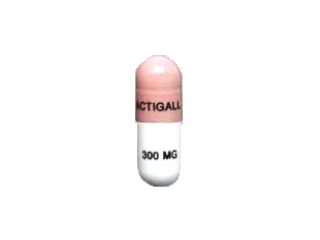
- Available Forms and Strengths: Capsules (250 mg, 500 mg), Tablets (250 mg), Oral Suspension (250 mg/5 mL)
- Major Manufacturers: Mayne Pharma, Rottapharm/Madaus, Aspen Australia, Sanofi-Aventis
- Prescription Status: Prescription Only Medicine (Schedule 4, S4, in Australia)
Mechanism of Action
Simplified: Actigall contains ursodeoxycholic acid, a naturally occurring bile acid. It works mainly by breaking down cholesterol in the liver and bile, reducing the formation of cholesterol-rich gallstones, and helping dissolve some existing stones. It also protects liver cells by reducing the toxicity of bile acids in certain diseases.
For Specialists: Ursodeoxycholic acid (UDCA) is a hydrophilic bile acid that replaces more hydrophobic (toxic) bile acids in the bile acid pool. It reduces cholesterol saturation of bile, modifies hepatic bile acid transport, and exerts cytoprotective, anti-inflammatory and immunomodulatory effects in cholestatic liver diseases.
Pharmacokinetics
- Absorption: Actigall is best absorbed in the small intestine, with bioavailability ranging between 60-80% when taken with food.
- Metabolism: Metabolised mainly in the liver by conjugation to glycine and taurine derivatives.
- Elimination: Mostly excreted via bile, some via faeces; very minimal renal excretion.
- Time to Peak Concentration: 1-3 hours after oral dose.
- Half-Life: 3.5-5.8 days (due to enterohepatic circulation).
- Duration of Action: Continuous while on therapy – regular intake is important for effect.
Everyday Use & Best Practices (Australia)
- Typical Adult Dose:
- For gallstone dissolution: 8-10 mg/kg/day, usually 250-750 mg per day in divided doses.
- For primary biliary cholangitis: 13-15 mg/kg/day in 2-3 divided doses.
- Capsules or tablets are swallowed whole with a glass of water; oral suspension can be used for children or those with swallowing difficulties.
- Course durations are long-term for liver disease or several months for gallstone dissolution.
- Always follow your doctor’s or pharmacist’s advice for schedule, dose adjustment, and tests (e.g., liver function monitoring).
Dosing: Morning vs Evening
- Morning Advantage: Easier to remember with daily routine; may reduce risk of missed doses.
- Evening Advantage: Some evidence suggests better overnight bile acid concentration, which may optimise gallstone dissolution.
- Tip: Consistency is key – take Actigall at the same time(s) each day. Set an alarm or reminder as needed.
- If prescribed divided doses, spread them evenly over the day (e.g., breakfast and dinner).
Taking with Food or On an Empty Stomach
- Take with or after meals to maximise absorption and decrease gastrointestinal side effects, following traditional English meal patterns (breakfast, lunch, dinner).
- Do not take on a completely empty stomach, as this reduces uptake and increases stomach irritation.
- Compatible with most typical Australian dietary habits, but high-fat meals can further enhance absorption.
- Avoid taking with very fatty foods only if advised for other health reasons.
Interaction Warnings
| Interaction | Effect | Advice |
| Certain cholesterol-lowering drugs (e.g., cholestyramine, colestipol) | May reduce absorption of Actigall | Separate doses by at least 2 hours |
| Aluminium-based antacids | May reduce effectiveness of Actigall | Space doses by at least 2 hours |
| Ciclosporin | Levels may be altered | Monitor and adjust dose as directed by doctor |
| Hormonal contraceptives or oestrogens | Increase cholesterol in bile; may reduce Actigall effect | Discuss alternatives if relevant |
| Alcohol | No direct interaction, but can worsen liver disease | Limit alcohol, especially if liver disease present |
| Grapefruit juice | No direct interaction known | Safe in moderation |
Indications for Use
| Indication | Approved? | Notes |
| Dissolution of cholesterol gallstones (non-calcified, functional gallbladder) | Yes (TGA approved) | First-line for small, radiolucent gallstones |
| Primary biliary cholangitis (PBC; formerly primary biliary cirrhosis) | Yes (TGA approved) | Slows progression, improves survival |
| Cystic fibrosis-related liver disease | Off-label | Paediatric and specialist centres |
| Intrahepatic cholestasis of pregnancy | Off-label | Used if benefits outweigh risks |
| Other cholestatic liver diseases (e.g., primary sclerosing cholangitis) | Off-label | Evidence less established |
Dosing According to Clinical Indication
| Indication | Age group | Typical Dose | Administration |
| Gallstone dissolution | Adults | 8-10 mg/kg/day (e.g., 500-750 mg/day in 2 doses) | With meals, course usually 6-24 months |
| PBC | Adults | 13-15 mg/kg/day (usually 750-1500 mg/day in 2-3 doses) | With meals, ongoing |
| Cholestatic liver diseases | Children | 10-20 mg/kg/day, in 2-3 doses | Specialist direction |
| Cystic fibrosis liver disease | Children & adults | 15-20 mg/kg/day | Specialist centres |
| Impaired hepatic function | Elderly | Start at lower end of dose range | Frequent monitoring |
Safety Profile / Side Effects
| Frequency | Side Effect | Notes |
| Common (>1%) | Diarrhoea, loose stools | Usually mild, dose-related |
| Uncommon (0.1-1%) | Nausea, abdominal discomfort, headache | Transient, may improve with time |
| Rare (<0.1%) | Pruritus, skin rash, urticaria | Stop medicine, seek advice if occurs |
| Very rare | Worsening of liver function | Includes in PBC and advanced liver disease – monitor regularly |
| Unknown | Gallstone calcification (stones become hard and less likely to dissolve) | May require reassessment |
Guidelines for Proper Use (Australia context)
- Take Actigall as directed by your doctor or pharmacist; do not change the dose or stop suddenly.
- Do not take extra doses if you miss one; take the next scheduled dose.
- Avoid over-the-counter antacids or supplements unless approved.
- Attend all scheduled liver function and blood check-ups as recommended by your clinic.
- If pregnant or planning pregnancy, discuss risks and benefits with your healthcare provider.
- If you experience persistent diarrhoea or itching, contact your doctor.
- Store below 25°C, away from moisture and light. Keep out of reach of children.
Alternative Treatment Options
- Gallstones (non-surgical alternatives):
- Chenodeoxycholic acid (Chenodal, Chenofalk): Less commonly used due to higher side effect rates (diarrhoea, liver toxicity).
- Shock wave lithotripsy: Suitable for selected patients; risk of recurrence.
- Cholecystectomy (surgical removal of gallbladder): Most definitive, preferred in most cases.
- Primary biliary cholangitis:
- Obeticholic acid (Ocaliva): For patients inadequately responding to UDCA; may cause or worsen pruritus.
- Fibrates (e.g., bezafibrate): Specialist off-label use in select cases; not TGA-approved for PBC.
- All PBS-reimbursed therapies must be prescribed for TGA-approved indications by registered Australian practitioners.
Legal, Registration, & Reimbursement Status in Australia
- TGA Approval: Ursodeoxycholic acid is included in the Australian Register of Therapeutic Goods (ARTG).
- Prescription Category: Schedule 4 (S4, Prescription Only Medicine).
- PBS Listing: PBS-subsidised for approved indications – e.g., primary biliary cholangitis and selected gallstone cases.
- Supply: Only from a pharmacist upon presentation of a valid Australian prescription.
- Professional dispensing advice and routine safety monitoring required.
Latest Research & Clinical Guidance (2022–2025)
- Gallstone Treatment: Recent Australian Liver Association and Gastroenterological Society of Australia guidelines confirm ursodeoxycholic acid as effective for non-calcified, cholesterol-rich gallstones with functioning gallbladder (J Gastroenterol Hepatol, 2024).
- PBC Management: Long-term studies confirm UDCA slows progression and improves survival in PBC when started early and at optimal doses (Lancet Gastro & Hepatol, 2022).
- Pregnancy: Recent reviews find UDCA is the best-supported agent for intrahepatic cholestasis of pregnancy, though still off-label in Australia. Always under specialist supervision (BJOJ, 2023).
- Emerging Uses: Research continues for cystic fibrosis liver complications and non-alcoholic steatohepatitis, but UDCA is not yet recommended first-line for these (Hepatology, 2024).
Availability & Delivery
| Pack Size | Strength | Average Price (AUD) | Delivery to Sydney | Delivery to Melbourne | Delivery to Brisbane |
| 100 capsules | 250 mg | $44.00 (PBS subsidised patients pay less) | 1–2 days | 1–2 days | 2–3 days |
| 60 capsules | 500 mg | $48.00 | 1–2 days | 1–2 days | 2–3 days |
| Oral Suspension 250mg/5mL | 250 mg/5mL, 300 mL | $52.00 | 1–3 days | 1–3 days | 2–4 days |
Availability: Actigall and generics are widely stocked in Australia’s urban and regional pharmacies. Express and standard delivery available through most ePharmacies; prescription required.
FAQ – Frequently Asked Questions
- How long before I see results with Actigall?
Dissolving gallstones may take 6–24 months; improvement in liver tests with PBC is often seen in 3–6 months. It’s important not to stop early, and regular check-ups are needed. - What happens if I miss a dose?
Take the next dose at the usual time—do not double up. If you often forget, set a daily reminder on your phone or smart watch. - Can I drink alcohol while taking this medicine?
Moderate alcohol may be safe if you do not have liver disease, but if you have any liver condition, it is best to minimise alcohol—always follow your doctor’s advice. - Is Actigall safe in pregnancy or if breastfeeding?
Off-label in pregnancy, but widely used under specialist supervision for some liver conditions. Limited safety data for breastfeeding; consult your doctor or pharmacist. - Can children take Actigall?
Yes, for certain liver diseases (e.g., cystic fibrosis-related liver damage), but always under the guidance of a paediatric specialist.
Please speak to your doctor, pharmacist, or nurse if you have further questions or concerns about Actigall or your liver health. This information is a guide and cannot replace personalised medical advice.