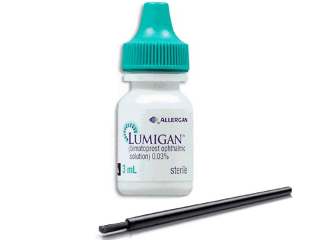
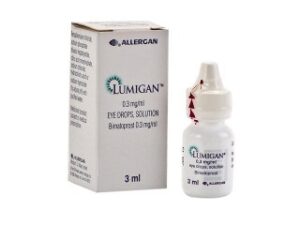
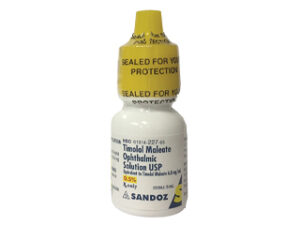
Lumigan + Applicators (Bimatoprost) – Patient-Friendly Guide (Australia)
Basic Product Information
| International Nonproprietary Name (INN) | Bimatoprost |
|---|---|
| Australia Brand Names | Lumigan®, Lumigan RC® |
| ATC Code | S01EE03 |
| Available Forms & Strengths |
|
| Manufacturers | Allergan Australia Pty Ltd (an AbbVie Company) |
| Prescription Status | Prescription Only Medicine (Schedule 4; requires a valid prescription in Australia) |
Mechanism of Action
In Simple Terms: Bimatoprost belongs to a group of medicines called “prostaglandin analogues.” It works by increasing the flow of natural fluids out of the eye, which helps to lower raised pressure inside the eye (intraocular pressure, or IOP).
For Healthcare Professionals: Bimatoprost is a prostamide, structurally related to prostaglandin F2α, which acts primarily on the FP prostanoid receptor. It increases both uveoscleral and trabecular outflow, leading to effective reduction of IOP.
Pharmacokinetics
- Absorption: Bimatoprost is rapidly absorbed through the cornea when applied as an eye drop.
- Distribution: Minimized systemic absorption, with plasma concentrations generally below levels of clinical concern.
- Metabolism: Undergoes hepatic metabolism to inactive metabolites via oxidation, N-deethylation, and glucuronidation.
- Elimination: Excreted mainly via urine; half-life in blood plasma is approximately 45 minutes.
- Duration of Action: Lasts at least 24 hours after instillation; once-daily dosing is effective.
Use in Everyday Life and Best Practices
Lumigan is typically used in the treatment of two major eye conditions:
- Open-Angle Glaucoma (the most common form of glaucoma)
- Ocular Hypertension (when eye pressure is higher than normal, but without optic nerve damage)
How to Use:
Apply one drop to the affected eye(s) once daily, preferably in the evening (see next section). Use sterile single-use applicators if provided to avoid contamination and infection risk.
- Wash your hands thoroughly before use.
- Open the bottle or vial carefully. If single-use applicators are supplied, use a new one for each application.
- Lean your head back and gently pull down your lower eyelid to form a pouch.
- Instil one drop into the eye. Avoid touching your eye or eyelid with the tip of the bottle or applicator.
- Close your eye and press your finger gently against the inner corner (near the nose) for about 1 minute. This minimises absorption into the rest of the body.
- Wipe away any excess with a clean tissue.
Storage: Store at room temperature (<25°C), away from direct light and moisture. Discard opened bottles after 4 weeks to avoid infection.
Dosing in the Morning vs Evening
- Evening Application (Preferred): Clinical trials show slightly better intraocular pressure control with evening dosing. This aligns with the natural rise in IOP during the night and early morning.
- Morning Application: Can be used if more convenient, but may be slightly less effective at controlling IOP peaks.
Tips: Choose a regular time (preferably evening) and stick to it daily. Set a reminder on your phone or keep your medicine where you’ll see it each night.
Taking with Food or on an Empty Stomach
Bimatoprost eye drops are not affected by food or drink. As it is applied directly to the eye, you do not need to adjust your usual eating habits, including traditional English meals.
Interaction Warnings
While systemic absorption is low, some interactions or precautions should be noted:
| Interaction/Warning | Effect/Recommendation |
|---|---|
| Other Eye Medicines | Wait at least 5 minutes between different eye drops to avoid dilution. Use preservative-free versions if sensitive or susceptible to dry eyes. |
| Contact Lenses | Remove lenses before applying drops; wait at least 15 minutes before reinserting. |
| Alcohol | No known direct interaction; avoid excessive use as it can worsen glaucoma risk factors. |
| Beta-Blockers, other IOP-lowering agents | Can be combined, but requires monitoring by your ophthalmologist. |
| Pregnancy & Breastfeeding | Not recommended unless explicitly advised by your doctor. |
Indications for Use
| Indication | Status |
|---|---|
| Open-Angle Glaucoma | Registered, first-line |
| Ocular Hypertension | Registered, first-line |
| Cosmetic eyelash growth (hypotrichosis) | Off-label, not TGA-approved |
| Angle-closure or secondary glaucomas | Off-label/not advised unless directed by a specialist |
Dosing According to Clinical Indications
| Population/Indication | Recommended Dose |
|---|---|
| Adults (Open-angle glaucoma/ocular hypertension) | 1 drop in affected eye(s) once daily, preferably in the evening |
| Elderly (>65 years) | Same as adults; monitor for side effects |
| Paediatrics (under 18) | Not approved/recommended without specialist advice |
| Cosmetic use (eyelashes) | Not registered indication in Australia |
Safety Profile/Side Effects
Common Side Effects:
- Redness of the eye
- Itchy or stinging sensation
- Eyelash changes (lengthening, darkening, thickening)
- Darkening of the eyelid skin
Less Common/Rare Side Effects:
- Darkening of iris (permanent change, more noticeable in people with mixed-colour eyes)
- Eye discomfort, dryness, or foreign body sensation
- Allergic conjunctivitis or eyelid inflammation
- Macular oedema (predominantly in people with risk factors)
Warning: Seek medical attention straight away if you experience sudden vision changes, severe pain, or swelling.
Guidelines for Proper Use
- Always use exactly as prescribed by your ophthalmologist or optometrist.
- Do not touch the dropper tip—this can cause contamination and eye infections.
- If you miss a dose, apply it as soon as you remember, but do not double up.
- Discard any unused solution 4 weeks after first opening.
- Inform your doctor about any other eye medicines or health conditions.
- For regional travel (e.g., in Australia’s hotter climates), keep the bottle away from direct sunlight and do not freeze.
Alternative Treatment Options
Lumigan is one of several prostaglandin analogues available in Australia. Other options include:
- Latanoprost (Xalatan®): Widely used, similar efficacy and safety profile.
- Travoprost (Travatan®): Another prostaglandin analogue.
- Tafluprost (Saflutan®): Preservative-free option for sensitive eyes.
- Beta-blockers (Timolol): Often combined with prostaglandin analogues for added effect.
- Carbonic Anhydrase Inhibitors, Alpha Agonists: Used when prostaglandins or beta-blockers are insufficient or contraindicated.
Pros & Cons: Prostaglandin analogues (including Bimatoprost) are first-line due to once-daily dosing and minimal systemic side effects. Some alternatives require more frequent use or have higher risk of systemic effects.
Legal, Registration, and Reimbursement Status in Australia
- TGA Registration: Registered by the Therapeutic Goods Administration (TGA) for ocular hypertension and open-angle glaucoma.
- Prescription Requirements: Schedule 4 (Prescription Only); available via community and hospital pharmacies.
- Reimbursement: Listed on the Pharmaceutical Benefits Scheme (PBS) for approved indications. Check with your pharmacy for any patient co-payment.
- Off-Label Use: Not reimbursed/cannot be promoted for cosmetic indications.
Latest Research/Clinical Guidance (2022–2025)
- Recent Australian and international studies confirm that once-daily Bimatoprost remains an effective first-line therapy for reducing intraocular pressure, offering comparable or slightly superior efficacy to Latanoprost and Travoprost (Razeghinejad et al, 2023; Australian Prescriber, 2024).
- 2023 RANZCO guidelines endorse prostaglandin analogues as primary initial therapy in most glaucoma cases unless contraindications exist.
- Evidence supports evening dosing for optimal IOP control. Emerging data highlight the importance of adherence and regular eye checks for best long-term outcomes.
- New preservative-free formulations (e.g., Bimatoprost PF) available for those with sensitivity or allergy to preservatives.
Availability and Delivery
| Pack Size | Approx. Price (AUD) | Uses/Duration |
|---|---|---|
| 3 mL bottle with applicators | $35–$45 | Approx. 1 month (both eyes) |
| 5 mL bottle with applicators | $55–$65 | Approx. 6–8 weeks (both eyes) |
| Delivery City | Estimated Delivery Time |
|---|---|
| Sydney | 1–2 business days |
| Melbourne | 1–2 business days |
| Brisbane | 2–3 business days |
| Perth | 3–5 business days |
| Adelaide | 2–3 business days |
| Hobart | 3–4 business days |
Frequently Asked Questions (FAQ)
- Can I use Lumigan with my contact lenses?
Remove your lenses before applying the drops. Wait at least 15 minutes before reinserting them. - Is it safe to use Lumigan during pregnancy or breastfeeding?
Use is not recommended unless clearly directed by your doctor. Discuss your circumstances with your ophthalmologist if you are pregnant or breastfeeding. - Can I use two different eye drops at the same time?
Yes, but wait at least five minutes between different eye medicines. Always apply drops before ointments. - What if I forget to use my drop?
Use the drop as soon as you remember, unless it’s almost time for your next dose. Do not use two doses at the same time. - Can Lumigan change my eye colour?
In rare cases, Lumigan may darken the colour of the iris (the coloured part of the eye), particularly in people with mixed-colour eyes. This change is permanent.
Further Information & Support
Please consult your ophthalmologist or pharmacist for more advice tailored to your health needs. For additional expert resources on glaucoma, visit Glaucoma Australia.