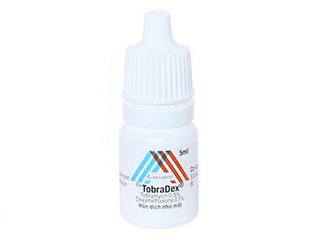
Tobradex (Tobramycin/Dexamethasone): Comprehensive Patient Information for Australia
Basic Product Information
| International Nonproprietary Name (INN) | Tobramycin and Dexamethasone |
|---|---|
| Australia Brand Names | Tobradex® (most common), other brands may include Tobradex Eye Drops and Tobradex Eye Ointment |
| ATC Code | S01CA01 |
| Available Forms & Strengths | Eye drops: Tobramycin 0.3% w/v and Dexamethasone 0.1% w/v (5mL bottles typical) Eye ointment: Tobramycin 0.3% w/w and Dexamethasone 0.1% w/w (3.5g tube typical) |
| Manufacturers | Alcon Laboratories (Australia) Pty Ltd and other licensed manufacturers |
| Prescription Status | Prescription only medicine (Schedule 4: Prescription Only Medicine) |
Mechanism of Action
- For Patients: Tobradex combines an antibiotic (tobramycin) and a corticosteroid (dexamethasone). Tobramycin fights bacteria that cause eye infections. Dexamethasone helps reduce swelling, redness, and itching by calming the body's immune response.
- For Specialists: Tobramycin, an aminoglycoside antibiotic, binds to the 30S subunit of bacterial ribosomes, inhibiting protein synthesis and leading to bacterial cell death. Dexamethasone, a potent synthetic glucocorticoid, downregulates pro-inflammatory gene expression and cytokine production, reducing tissue inflammation and modulating immune cell migration in ocular tissue.
Pharmacokinetics
- Absorption: Minimal systemic absorption when used as directed for ocular administration.
- Metabolism: Dexamethasone is metabolised primarily in the liver. Tobramycin is not significantly metabolised systemically after topical use.
- Elimination: Primarily via urine for tobramycin and hepatic/renal routes for dexamethasone and its metabolites.
- Duration of Action: Tobramycin - up to 8 hours; Dexamethasone’s ocular effects can persist for several hours post administration.
Use in Everyday Life and Best Practices
Tobradex should be used exactly as prescribed by your Australian healthcare professional. It is most frequently used to treat or prevent eye infections accompanied by inflammation (redness, swelling, discomfort) after surgery or in certain infections of the external eye.
- Eye Drops: Wash your hands, shake the bottle well, and instil one or two drops into the affected eye(s) as prescribed, typically every 4–6 hours.
- Eye Ointment: Apply a small strip of ointment inside the lower eyelid, usually 2–3 times per day, as directed.
- General advice:
- Do not touch the dropper or tube tip to your eye or any surface to avoid contamination.
- If you use contact lenses, remove them before application and wait 15 minutes after using Tobradex before reinserting them.
- Completing the Course: Always complete the full prescribed course even if symptoms improve.
Dosing in the Morning vs Evening: Tips for Regularity
- Best Practice: Eye drops or ointment are typically used several times a day at evenly spaced intervals.
- Morning versus evening: Steroid effects are not markedly dependent on time, but it may be helpful to schedule doses at routine times (e.g., after breakfast, lunch, dinner, and bedtime) to ensure consistency.
- Tip: Set phone alarms or use a dosing chart to maintain steady administration, especially if prescribed four times daily.
- Special note: If you miss a dose, use it as soon as you remember, unless it’s close to the next dose. Do not double up.
Taking with Food or on an Empty Stomach
- Tobradex is an eye preparation, not intended for oral consumption.
- Food does not affect the action of the eye drops or ointment.
- After applying eye drops/ointment, wait a few minutes before eating to prevent accidental contamination, especially after touching your eyes.
- Australian context: No modifications are necessary based on typical dietary habits (e.g., no interaction with coffee, tea, bread, or typical Australian meals).
Interaction Warnings
| Substance or Factor | Potential Interaction | Advice |
|---|---|---|
| Other Eye Medicines | May dilute or interact with effect if used too closely together | Wait at least 5 minutes between different eye products |
| Contact Lenses | Benzalkonium chloride may discolour soft lenses | Remove lenses and wait 15 minutes after dosing |
| Alcohol | No direct interaction, but may worsen irritation if your eyes are already sensitive | Use with caution if alcohol causes eye dryness |
| Systemic Immunosuppressants | Potential additive effect and risk of infection | Notify your healthcare provider |
| Other Antibiotics (aminoglycosides) | Risk of increased toxicity | Inform the pharmacist if prescribed similar medications |
Indications
| Indication | Status (Australia) | Notes |
|---|---|---|
| Ocular inflammation with probable/confirmed bacterial infection | Approved | Primary use |
| Post-operative inflammation and infection (eye surgery) | Approved | Frequently prescribed post-cataract or other eye surgeries |
| Blepharitis, conjunctivitis (with infection and inflammation) | Off-label/Guideline-based | As directed by specialist |
| Keratitis (superficial/non-penetrating with bacteria) | Off-label/Guideline-based | Specialist supervision required |
Dosing According to Clinical Indications
| Population | Eye Drops Dosage | Ointment Dosage | Duration | Notes |
|---|---|---|---|---|
| Adults | 1–2 drops into the affected eye(s) every 4–6 hours | A small amount (1–1.5cm) inside lower eyelid up to 3–4 times daily | 5–14 days (as instructed) | May be tapered by doctor/pharmacist |
| Children (over 2 years) | Same as adults | Same as adults | Use with caution; under supervision | Doctor's advice essential |
| Elderly | Same as adults | Same as adults | Individualised; monitor for side effects | Check for other eye conditions |
| Infants <2 years | Not recommended | Not recommended | — | Not indicated due to risk of corticosteroid and antibiotic toxicity |
Safety Profile and Side Effects
| Type | Frequency | Symptoms | Action |
|---|---|---|---|
| Common | 1–10% of patients | Eye discomfort, stinging, tearing, blurred vision, swelling | Usually mild and transient; seek advice if persistent |
| Uncommon | <1% | Eye redness, itching, allergic reactions, eyelid swelling | Report to doctor or pharmacist promptly |
| Rare/Serious | <0.1% | Increased eye pressure (glaucoma), cataracts (with prolonged use), corneal ulcers, infection relapse | Urgent medical review required |
| Warnings | — |
| Use only as directed; do not self-prescribe |
Guidelines for Proper Use (Australian Context)
- Follow your doctor’s instructions and finish the course even if you feel better.
- Wash hands thoroughly before and after application.
- Do not share your eye drops or ointment, to prevent transfer of infection.
- If vision is temporarily blurred after application, wait before driving or operating equipment.
- Dispose of the bottle/tube one month after opening, in line with Australian guidelines.
- Return any unused or expired medicine to your local pharmacy for safe disposal.
- Contact your GP, pharmacist, or optometrist promptly if you notice pain, worsening redness, or vision changes.
Alternative Treatment Options (PBS or Private Prescription)
- Dexamethasone (alone): Less coverage for bacterial infections; not suitable when infection is present.
- Tobramycin (alone): Used when only an infection is present and no inflammation.
- Chloramphenicol Eye Drops: Broad-spectrum antibiotic; PBS listed, but does not address inflammation.
- Maxitrol® (Neomycin/Polymyxin B/Dexamethasone): Another combination product; available in Australia via prescription. Different antibiotic spectrum and similar anti-inflammatory effect.
- Ciprofloxacin Eye Drops: Alternative for bacterial conjunctivitis; PBS listed for certain indications.
Legal, Registration, and Reimbursement Status in Australia
- Registered with the Therapeutic Goods Administration (TGA).
- Available by prescription from medical practitioners and optometrists with prescribing rights.
- Listed on the Pharmaceutical Benefits Scheme (PBS) for certain indications, reducing cost for eligible Australians.
- Strictly for individual use; it is a criminal offence to supply prescription medication to others.
Latest Research and Clinical Guidance (2022–2025)
- Current consensus: Australian and international ophthalmology guidelines (e.g. RANZCO, AAO) continue to endorse tobramycin/dexamethasone for post-surgical eye care and mixed inflammatory/infectious conditions when appropriately diagnosed.
- Recent studies (e.g., Chen et al., 2023; RANZCO practice statements 2024) indicate effectiveness in controlling post-operative inflammation and reducing the risk of secondary infection.
- Emerging evidence supports shorter duration courses (typically 7–10 days) to minimise steroid-related side effects.
- Medical auditing in Australia confirms appropriate use and continued monitoring for resistance and infection control.
Availability and Delivery
| Pack Size | Form | Indicative Price (AUD, May 2024) | Delivery Times to Major Cities |
|---|---|---|---|
| 5 mL | Eye Drops | $21–$35 (PBS price lower for eligible patients) | Sydney: Same/next business day Melbourne: Same/next business day Brisbane: 1–2 business days Perth: 2–3 business days Adelaide: 1–2 business days |
| 3.5 g | Eye Ointment | $23–$37 (PBS price lower for eligible patients) | Same as above |
Free local pick-up available from most major pharmacy branches. Home delivery options may vary; check with your preferred pharmacy.
FAQ – Frequently Asked Questions
- 1. Can Tobradex be used for all types of eye infections?
No. Tobradex is only appropriate for bacterial eye infections with inflammation. It is not effective and may be harmful for viral (e.g., herpes simplex) or fungal infections. Always rely on your healthcare provider for diagnosis before use. - 2. What should I do if I forget a dose?
Instil the missed dose as soon as you remember. If it’s close to the next scheduled dose, skip the missed dose and continue as normal. Do not use double doses. - 3. Are there any special precautions for children or the elderly?
Yes. Use in children (over 2 years) and the elderly should be carefully monitored by a doctor, with regular checks for side effects such as raised eye pressure. It is not recommended for infants or toddlers under 2 years. - 4. Can I drive after using Tobradex?
Your vision may be blurred temporarily after application. Only drive or use machinery once your vision is clear again. - 5. What if my symptoms do not improve or get worse?
Stop use and seek immediate advice from your GP, pharmacist or optometrist. Persistent or worsening symptoms may indicate a different or more serious condition.