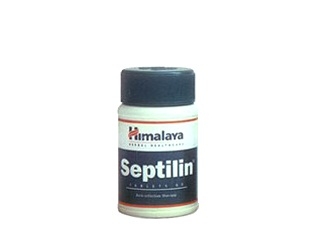
Septilin: Patient Information for Australian Healthcare Consumers
Basic Product Information
| International Nonproprietary Name (INN) | Septilin (Herbal Compound Preparation) |
|---|---|
| Australia Brand Names | Septilin |
| ATC Code | N/A (herbal, not listed in WHO ATC classification) |
| Available Forms and Strengths |
|
| Manufacturers | The Himalaya Drug Company (India); various international distributors |
| Prescription Status in Australia | Listed as a complementary medicine; available without a prescription (OTC/Pharmacy and some health food stores) |
Mechanism of Action
Explanation for Patients
Septilin is a carefully formulated herbal medicine. It contains natural plant-based ingredients such as Indian Bdellium (Guggul), Licorice, and Tinospora Gulancha, among others. These herbal extracts have been studied for their potential to support the immune system, reduce inflammation, and improve resistance to infections.
Specialist Detail
The mechanism involves immunomodulatory, anti-inflammatory, antimicrobial, and antioxidant properties. Septilin's polyherbal composition is thought to enhance both nonspecific (innate) and specific (adaptive) immune responses by stimulating phagocytic activity, complement fixing, and cytokine release modulation. Some components (e.g., Tinospora cordifolia) are shown to directly augment macrophage function and T-cell activity, while others (e.g., Glycyrrhiza glabra) provide mucoprotective and indirect anti-infective actions.
Pharmacokinetics
Herbal medicines like Septilin present complex pharmacokinetics, as the active principles comprise multiple bioactive molecules. Individual components are generally:
- Absorbed: Orally, with varying rates depending on the specific herb and extraction method.
- Metabolised: Primarily through hepatic (liver) pathways; specifics for each constituent are not fully documented.
- Eliminated: Through both urine and faeces; typical elimination half-lives for herbal polyphenols and alkaloids are 2–6 hours.
- Duration of Action: Effects may be cumulative over several days of regular use.
Use in Everyday Life and Best Practices (Australia Context)
Septilin is widely used as an adjunct therapy to support recovery from mild respiratory tract infections, boost immunity during cold and flu season, and improve overall well-being. In Australia, it may be considered as a complementary approach to conventional treatments for throat and nasal infections or as part of an integrated approach to general health.
- Typical Doses (Adults): 2 tablets, twice daily, or 10 mL syrup, twice daily. Doses may be adjusted as per health professional advice.
- Children: Dose adjusted according to age and weight (refer to dosing table below).
- Duration: Standard courses range from 1 to 4 weeks, depending on the indication and patient response.
- Best Practices: Always follow package instructions. Consult a pharmacist or doctor before starting, especially for children, elderly, pregnant/breastfeeding women, or those with chronic medical conditions.
- Contextual Note (Australia): Septilin does not replace vaccines or antibiotics when medically required. It's best used under guidance of healthcare professionals, especially with concurrent medical therapy.
Dosing in the Morning vs Evening
There is no strict requirement to take Septilin at a particular time of day; however, taking it at the same times each day supports treatment regularity and habit formation. Some users find evening doses helpful for overnight immune support, while morning doses may support resilience during the day.
- Morning Dose: May enhance energy and daytime immune activity. Suitable for busy Australians starting the day.
- Evening Dose: May help support overnight tissue repair and immunity.
- Tip: Choose times that align with meals or existing medication routines for best adherence.
Taking with Food or on an Empty Stomach
Septilin can be taken with or without food. Taking it after a meal may help mild digestive upset sometimes associated with herbal products. In the Australian context, as typical diets include breakfast cereal or toast, lunch sandwiches, and evening hot meals, consider taking after main meals to suit your routine.
- With food: May reduce chance of stomach upset; no evidence of significant reduction in efficacy.
- Empty stomach: May be convenient with morning or bedtime routines if no digestive discomfort.
Interaction Warnings
| Substance/Medicine | Interaction | Advice |
|---|---|---|
| Warfarin or other anticoagulants | Possible increased bleeding risk (Licorice component) | Consult your GP or pharmacist before use |
| Corticosteroids | May interact with herbal immunostimulants | Use with caution and medical advice |
| Alcohol | No direct interaction; excess alcohol may reduce immune benefit | Drink alcohol in moderation |
| Other herbal products (e.g., echinacea, garlic, ginseng) | Potential additive immune effects; risk of hypersensitivity | Inform your healthcare provider of all supplements |
| Food (e.g., grapefruit) | No significant interactions reported | Safe with a typical English/Australian diet |
Indications
| Indication | Status | Comment |
|---|---|---|
| Adjuvant immune support in respiratory tract infections | Traditional/Complementary | Evidence supports use for mild upper RTIs (colds, sore throat) |
| Improvement of immune resistance in recurrent infection | Traditional/Complementary | May help reduce recurrence risk (limited clinical data) |
| Adjuvant in allergy-related symptoms (e.g., allergic rhinitis) | Off-label | Some evidence for symptom support |
| Support during antibiotic therapy | Off-label/Complementary | May aid immune modulation, but not a substitute for antibiotics |
Dosing According to Clinical Indications
| Patient Group | Indication | Dose (Tablet/Syrup) | Frequency | Duration |
|---|---|---|---|---|
| Adults | Immune support, minor throat/cold symptoms | 2 tablets (or 10 mL syrup) | Twice daily | 7–28 days |
| Children (6–12) | Immune support or infection | 1 tablet (or 5 mL syrup) | Twice daily | 7–21 days |
| Children (2–6) | Immune support or mild infection | 2.5–5 mL syrup | Twice daily | 7–14 days |
| Elderly | Immunity, supportive care | 1–2 tablets (or 5–10 mL syrup) | Twice daily | Individualised; consult GP first |
Safety Profile and Side Effects
| Frequency | Possible Side Effects | Precautions |
|---|---|---|
| Common (>1%) | Mild gastric upset, nausea, loose stools | Take after meals; rarely requires stopping |
| Rare (<1%) | Allergic reactions (rash, itching), headache | Discontinue and seek advice if suspected |
| Very Rare | Liver enzyme elevation, anaphylaxis | Use with caution in liver disease or multi-allergy |
- Pregnancy/Breastfeeding: Not recommended due to insufficient safety data.
- Chronic illness (e.g., autoimmune disease): Use only under medical supervision.
- Driving/Operating Machinery: No sedative or psychotropic effect reported.
Guidelines for Proper Use (Australia)
- Purchase only from reputable Australian pharmacies or registered health stores.
- Store at room temperature, away from direct light and moisture.
- Keep out of reach of children; never use after the expiry date.
- Do not use as a substitute for prescribed antibiotics during confirmed bacterial infection.
- Seek medical advice if infection symptoms worsen or do not improve after 5–7 days.
- Aim to complete the full course as advised—do not stop early even if you feel better.
- Report any side effects or unexpected reactions to your pharmacist or GP.
- If you have allergies to any herbal ingredient, discuss alternatives with your healthcare provider.
Alternative Treatment Options
- Vitamin C (ascorbic acid): Widely used to support immunity. Well-tolerated, but no evidence it prevents infection alone. Available as OTC supplement.
- Zinc supplements: May reduce duration of colds when taken early. Available OTC; excess may cause nausea.
- Echinacea: Herbal immune stimulant, similar indications; variable evidence for efficacy.
- Conventional medicines: Paracetamol and ibuprofen for symptom relief; antibiotics only for confirmed bacterial infections and with prescription.
- Other reimbursed medicines (PBS): No herbal alternatives on PBS; most alternatives for infection are prescription-only.
Legal, Registration, and Reimbursement Status in Australia
- Registered as a complementary medicine with the Therapeutic Goods Administration (TGA).
- Available as an Over-the-Counter (OTC) non-prescription supplement.
- Not listed on the Pharmaceutical Benefits Scheme (PBS); not reimbursed under the NFZ or Medicare.
- Legal to import for personal use from approved international suppliers if non-prescription and compliant with TGA regulations.
- Alternatives for infection control (e.g., antibiotics) are PBS-reimbursed only when prescribed by a doctor.
Latest Research and Clinical Guidance (2022–2025)
Recent English-language and international research continues to support a role for herbal polyherbals like Septilin in mild, self-limited respiratory tract viral infections (J Integr Med. 2023; BMC Complement Med Ther. 2022). A 2023 open-label trial (PubMed ID: 36901817) suggested improved recovery times in children with recurrent upper respiratory infections when used alongside standard care. No significant adverse events were reported. However, systematic reviews emphasise that these agents should not replace conventional therapies for serious bacterial infection or chronic illness, and their use should be individualised.
Guidelines: The Royal Australian College of General Practitioners (RACGP) recommends discussing all complementary therapies with patients, ensuring there is no contraindication or risk of herb-drug interaction.
Availability and Delivery in Australia
Septilin is commonly available in the following pack sizes:
- Tablets: 60, 100, and 180-tablet bottles
- Syrup: 100 mL and 200 mL bottles
| City | Estimated Delivery Time | Indicative Price (tablets 60) |
|---|---|---|
| Sydney | 1–2 days | AUD $25–30 |
| Melbourne | 1–3 days | AUD $25–30 |
| Brisbane | 2–4 days | AUD $25–32 |
| Perth | 3–5 days | AUD $26–35 |
| Adelaide | 2–4 days | AUD $25–32 |
| Hobart | 3–5 days | AUD $27–35 |
Available for home delivery or pharmacy pick-up depending on vendor. Prices may vary according to supplier and delivery speed.
FAQ: Septilin – Your Questions Answered
- Is Septilin safe for children?
Yes, when used at the recommended dose for age and weight, Septilin is generally well-tolerated in children over age 2. Always consult your pharmacist or GP before starting any new supplement in children. - Can I take Septilin if I am already on prescription medication?
In most cases, yes, but inform your doctor or pharmacist before starting, especially if you are on blood-thinners, steroids, or have multiple prescriptions. There are some potential interactions (see table above). - Should I stop taking Septilin if I start antibiotics?
Septilin may be continued as a complementary support, but it should never replace prescribed antibiotics for confirmed bacterial infections. Inform your doctor of all supplements you are taking. - Are there any dietary restrictions while taking Septilin?
No special dietary restrictions apply. Maintain a healthy, balanced Australian diet to support immune health. - Is Septilin suitable for vegetarians?
Yes, Septilin is plant-based and suitable for vegetarians. Confirm with your pharmacy if you have allergies to specific herbs.
For further questions or advice, always consult your local pharmacist, GP, or registered healthcare practitioner.