Rogaine (Minoxidil) – Comprehensive Patient Information for Australia
Basic Product Information
| International Non-proprietary Name (INN) | Minoxidil |
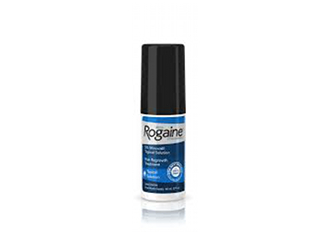
| Common Australian Brand Names | Rogaine®, Regaine®, Apo-Minoxidil |
| ATC Code | D11AX01 |
| Available Forms & Strengths | Topical solution (2%, 5%), Foam (5%) |
| Manufacturers | Johnson & Johnson Pacific, Apotex, various generic brands |
| Prescription Status in Australia | Pharmacist-Only Medicine (Schedule 2) |
Mechanism of Action
Simple Explanation: Minoxidil, the active ingredient in Rogaine, works by widening blood vessels in the scalp, improving blood flow to hair follicles. This better blood flow brings more oxygen, nutrients, and growth factors to the hair follicles, helping them to grow stronger, thicker hair over time.
For Specialists: Minoxidil is a direct-acting peripheral vasodilator, opening ATP-sensitive potassium channels in vascular smooth muscle. Topically, it prolongs the anagen (growth) phase of the hair cycle, possibly by improving microcirculation around follicles and stimulating VEGF (vascular endothelial growth factor) expression locally.
Pharmacokinetics
- Absorption: When applied to intact scalp skin, approximately 1.4% of the dose is absorbed systemically. Higher absorption may occur through broken or inflamed skin.
- Metabolism: Primarily hepatic (by the liver) via glucuronidation to inactive metabolites.
- Elimination: Excreted mainly in urine (as metabolites).
- Duration of Action: Continued use required to maintain effect; hair regrowth usually becomes apparent after 4–6 months of regular application.
Use in Everyday Life and Best Practices
Minoxidil (Rogaine) is most commonly used to treat hereditary hair loss (androgenetic alopecia) in both men and women. It comes as a foam or a topical solution, which you apply directly to the affected scalp areas.
- Apply as directed, usually twice daily to dry scalp. Separate doses by about 12 hours for best results.
- Do not wash your hair for at least 4 hours after application.
- Wash your hands thoroughly after use to avoid transferring minoxidil to other areas.
- Results usually appear after 4–6 months; continued use is necessary to maintain regrowth.
- Safe to use with most styles and after swimming, but avoid application to broken/inflamed skin.
Dosing in the Morning vs Evening
- Apply in the morning and evening, ~12 hours apart (e.g., 8am and 8pm).
- Morning Advantages: Allows for scalp to dry before leaving home; less likely to transfer residue to pillows.
- Evening Advantages: Reduces exposure to sun and wind after application; convenient for post-shower use and before bed.
- Tips: Stick to a consistent schedule to avoid missing doses. Set a daily alarm or integrate into your oral hygiene routine.
Taking with Food or on an Empty Stomach
- Minoxidil is for topical use only and is not affected by meals or dietary habits.
- Australian diets, including vegetarian or low-fat approaches, have no known impact on efficacy.
- Always apply to a clean, dry scalp—avoid applying immediately after using hair oils, gels, or heavy conditioners.
Interaction Warnings
| Type of Interaction | Details |
| Medications | - Oral minoxidil: increased risk of systemic side effects—avoid combining.
- Topical corticosteroids or tretinoin: may increase absorption of minoxidil and risk of skin irritation.
- Antihypertensive drugs: rare additive hypotensive effect possible—usually not clinically significant at topical doses.
|
| Alcohol | Topical use is not affected by alcohol intake, but avoid applying to the scalp after excessive drinking as you may forget correct application. |
| Food/Drinks | No known interactions. Do not ingest minoxidil. |
| Other Hair Products | - Apply minoxidil first, wait to dry, then use styling products.
- Heavy oils/serums may reduce scalp absorption.
|
Indications
| Indication | Status | Patient Group |
| Androgenetic alopecia (male-pattern hair loss) | Approved (PBS, TGA) | Adult males (18–65 years) |
| Female pattern hair loss (FPHL) | Approved (PBS, TGA) | Adult females (18–65 years) |
| Alopecia areata | Off-label | Adults/children (specialist recommendation) |
| Other forms of hair thinning | Off-label | Case-by-case clinical use |
Dosing According to Clinical Indication
| Patient Group | Form | Typical Dose | Frequency | Maximum Daily Dose | Comments |
| Adults (Male) | 5% solution or foam | 1 mL or capful | Twice daily | 2 mL or 2 capfuls | Apply to affected scalp area only. |
| Adults (Female) | 2% solution, 5% foam | 1 mL or capful | Once (foam) or twice (solution) daily | 2 mL or 2 capfuls | 5% foam often preferred due to less irritation. |
| Children/Adolescents | Use only under specialist advice | Individualised | Individualised | Specialist supervision needed | Usually for alopecia areata (off-label use) |
| Elderly | Standard adult doses | As above | As above | - | May require monitoring if significant comorbidities |
Safety Profile / Side Effects
| Side Effect | Frequency | Comments |
| Irritation, itching, dry scalp | Common (>10%) | Usually mild; consider foam if solution is problematic. |
| Unwanted facial or body hair growth | Uncommon (<3%) | May occur if product runs onto face/neck. |
| Increased hair shedding (telogen effluvium phase) | Common (>10%) | Usually first 2–8 weeks; typically subsides as new hair grows. |
| Allergic contact dermatitis | Rare (<1%) | Usually related to propylene glycol in solution (foam is less allergenic). |
| Systemic effects: low blood pressure, dizziness, swelling | Very rare | Mainly if applied excessively or to broken skin. |
| Headache | Rare | Discontinue if persistent or severe. |
Guidelines for Proper Use: Australia-Specific Advice
- Apply only to the scalp, not to other areas of the body.
- Avoid getting product in eyes, mouth, or on broken skin.
- If scalp irritation is persistent, consider switching to foam or seeking pharmacist/GP advice.
- Sun safety is important—if outdoors after application, consider wearing a hat to protect scalp and avoid sunburn with product residue present.
- Wash hands immediately after application. If hands become dry/irritated, use a light, non-greasy hand cream.
- Do not double doses to make up for missed applications—simply resume the next scheduled dose.
- For best results, initiate use as early as possible after noticing hair thinning or loss.
- Available at community pharmacies; pharmacists are trained to advise on its use.
Alternative Treatment Options
- Finasteride (oral, prescription only): Used mainly in men. Inhibits 5-alpha-reductase enzyme; can be more effective for vertex hair loss but may cause systemic side effects and is not TGA-approved for women.
- Dutasteride (off-label): Similar action to finasteride but not PBS-reimbursed for hair loss.
- Low-level laser therapy (LLLT): Non-pharmacological; variable evidence.
- Platelet-rich plasma (PRP): Office-based scalp injections; under investigation, currently expensive.
- Wigs, hair fibres, microblading: Cosmetic aids; no effect on hair growth.
- Hair transplant surgery: Most effective permanent solution, but costly and requires specialist referral.
Comparison: Rogaine/Minoxidil is convenient, widely available, non-prescription, and suitable for both men and women. Oral agents offer greater efficacy for some men, but have additional risks/monitoring requirements.
Legal, Registration, and Reimbursement Status (Australia)
- Registered with the Therapeutic Goods Administration (TGA).
- Classified as a Pharmacist-Only Medicine (Schedule 2) — purchase requires professional pharmacist advice but not a prescription.
- Not usually covered by the Pharmaceutical Benefits Scheme (PBS) for hair loss; patients pay full retail price.
- Regaine, Rogaine, and generics available at most Australian pharmacies.
Latest Research & Clinical Guidance (2022–2025)
- Topical minoxidil remains the first-line recommended therapy for androgenetic alopecia in both sexes (Australian Journal of General Practice, 2023).
- Recent systematic reviews highlight comparable efficacy between 5% foam and 5% solution, with lower rates of irritation for foam formulations (J Dermatolog Treat. 2023).
- Combination therapy (minoxidil + finasteride) may offer increased efficacy in men but requires doctor supervision and regular assessment (Dermatology Guidelines Australia, 2024).
- Early use (within 1–2 years of hair loss onset) offers the best long-term outcomes.
- Oral minoxidil, a low-dose option, is under evaluation but not TGA-approved for hair loss as of June 2024.
Availability and Delivery
| Formulation | Common Pack Sizes | Indicative Retail Price (AUD) | Estimated Delivery (Sydney, Melbourne, Brisbane, Perth) |
| Rogaine/Regaine 5% Foam (Men) | 60g, 3 x 60g | $37–$55 (60g), $110–$155 (3-pack) | 1–3 business days (capital cities); 2–5 days (regional/rural) |
| Rogaine/Regaine 5% Foam (Women) | 60g | $35–$55 | As above |
| Minoxidil 2% Solution | 60mL, 3 x 60mL | $24–$45 (60mL), $65–$120 (3-pack) | As above |
| Apo-Minoxidil 5% Solution | 60mL | $29–$38 | As above |
FAQs – Common Patient Questions
- How long will it take to see results?
Most users notice less hair loss in 2–3 months, and visible regrowth after 4–6 months. Continued twice-daily use is essential for best outcomes. - Can I use minoxidil with other hair products?
Yes. Apply minoxidil first to a dry scalp, allow it to dry fully (15–30 mins), then use styling products. Avoid heavy or oily products immediately before application. - What happens if I stop using minoxidil?
If you discontinue treatment, any hair regrowth is likely to be lost within 3–6 months, and your pattern of hair loss will continue as before. - Is minoxidil safe for everyone?
Minoxidil is safe for most adults. If you have heart disease, are pregnant or breastfeeding, or are under 18, consult your doctor or pharmacist before starting. - Can I use minoxidil on a receding hairline or beard?
Minoxidil is officially approved for vertex and crown scalp hair loss. Off-label use on the hairline or beard is at your own risk and may cause unwanted hair growth in adjacent areas.