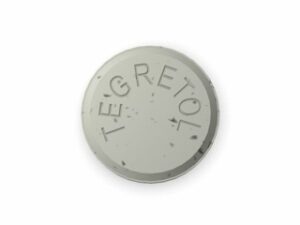
Carbamazepine: Comprehensive Patient Guide (Australia)
Basic Product Information
| Generic Name (INN) | Carbamazepine |
|---|---|
| Brand Names in Australia | Tegretol®, Teril®, Neurotol® |
| ATC Code | N03AF01 |
| Available Forms & Strengths | Tablets (100 mg, 200 mg), Chewable tablets (100 mg), Controlled Release (CR) tablets (200 mg, 400 mg), Oral suspension (20 mg/mL) |
| Common Manufacturers | Novartis, Alphapharm, Apotex, Pfizer |
| Legal Status | S4 – Prescription Only Medicine (PBS subsidised for specific indications) |
What is Carbamazepine?
Carbamazepine is a medication commonly prescribed in Australia for epilepsy, certain types of nerve pain (such as trigeminal neuralgia), and, less commonly, for mood stabilisation in bipolar disorder. It works by stabilising the electrical activity in the brain and nerves, helping to prevent seizures and pain episodes. Carbamazepine has been used for over 50 years and remains a key treatment for many neurological and psychiatric conditions.
Mechanism of Action
- For Patients: Carbamazepine acts by calming hyperactive nerves in the brain, which can stop seizures and nerve pain.
- For Specialists: Carbamazepine blocks voltage-gated sodium channels in neurons, inhibiting the repetitive firing of action potentials and stabilising neural membranes. It also has some effects on glutamate receptors and neurotransmitter release.
Pharmacokinetics
- Absorption: Well absorbed orally, though sustained-release forms release slowly for more even blood levels.
- Metabolism: Extensively metabolised in the liver (CYP3A4), with active metabolite (carbamazepine-10,11-epoxide).
- Elimination: Mainly via urine (as metabolites); small amount unchanged in faeces.
- Half-life: Initial dose: 25–65 hours; later, reduced to ~12–17 hours due to liver enzyme induction ("autoinduction").
- Duration of Action: CR forms provide more stable, lasting control (12–24 hours per dose).
Use in Everyday Life and Best Practices (Australia)
- Typical Adult Dose: 200–400 mg daily, gradually increased to a usual maintenance dose of 800–1200 mg daily in divided doses. Maximum: 1600 mg/day (in specialist cases).
- Chewable tablets & suspension: Often used in children and people who have trouble swallowing pills.
- Start low, go slow: To reduce side effects, doctors usually begin with a low dose and gradually increase over several weeks.
- Consistency matters: Take at the same times every day to avoid missed doses and optimise seizure control.
- Do not stop suddenly: Stopping carbamazepine abruptly can trigger seizures. Only adjust your dose under medical supervision.
- Driving and operation of machinery: Australian law requires you to be seizure-free for specific periods before driving. Carbamazepine may cause drowsiness, especially early in treatment. Check with your doctor or pharmacist and Austroads guidance.
Dosing in the Morning vs Evening
- Morning vs Evening: Carbamazepine is generally taken 2–3 times a day (immediate release), or once/twice daily (controlled release). Taking with evening meals may reduce sleep disturbance if sleepiness occurs as a side effect.
- Tips for Regularity: Try to take your medicine at consistent times each day (e.g., after breakfast and dinner).
- Advantages of divided dosing: Avoids large swings in drug levels, reducing side effects and chances of breakthrough seizures.
- Many Australians: Prefer taking medication with breakfast and the evening meal. If once daily, usually after dinner to lessen drowsiness during work hours.
Taking with Food or on an Empty Stomach
- With or without food: Carbamazepine can be taken with or without food, but taking with food or after a meal (such as breakfast or dinner) is often recommended to reduce stomach upset.
- Australian dietary context: No special restrictions with typical English/Australian diets. Avoid excessive grapefruit or grapefruit juice—it can increase the risk of side effects.
- Never crush or chew controlled-release tablets: Swallow whole with water. OK to split standard tablets if scored.
Interaction Warnings
| Type | Examples | Possible Effects |
|---|---|---|
| Food | Grapefruit, grapefruit juice | Increases carbamazepine levels (risk of side effects) |
| Alcohol | All forms | Increases drowsiness and risk of seizures |
| Other Medicines | - Antidepressants (SSRIs, MAOIs) - Oral contraceptives - Other anticonvulsants (phenytoin, valproate) - Antifungals (itraconazole, ketoconazole) - Some antibiotics (erythromycin) - Blood thinners (warfarin) | Alter carbamazepine levels/efficacy, or increase side effect risk |
- Always tell your doctor or pharmacist about all medications and supplements you take.
- Carbamazepine can reduce effectiveness of some contraceptives—consider additional contraception.
Indications (Uses)
| Approved | Off-Label/Common |
|---|---|
|
|
Dosing by Clinical Indication
| Indication | Age Group | Starting Dose | Typical Maintenance Dose | Max Dose |
|---|---|---|---|---|
| Epilepsy | Adults | 100–200 mg once or twice daily | 800–1200 mg/day, divided doses | 1600 mg/day |
| Epilepsy | Children (6–12 years) | 100 mg 1–2 times/day | 10–20 mg/kg/day | 1000 mg/day |
| Trigeminal Neuralgia | Adults/Elderly | 100 mg 1–2 times/day | 200–800 mg/day | 1200 mg/day |
| Bipolar Disorder | Adults | 100–200 mg at night | 400–600 mg/day | 1200 mg/day |
Safety Profile and Side Effects
| Common | Occasional | Rare but Serious |
|---|---|---|
|
|
|
- Contact your doctor immediately for rashes, fever, sore throat, mouth ulcers, yellow skin/eyes, or unusual bleeding.
- Blood tests are usually required before and during treatment.
- Genetic screening (HLA-B*1502) is recommended for some Asian ancestry patients due to risk of serious skin reactions.
Guidelines for Proper Use (Australian Pharmacy Advice)
- Start with low doses and increase gradually as directed by your specialist.
- Take with food or a meal if you experience stomach upset.
- Never chew or crush slow-release tablets; swallow whole with water.
- If you miss a dose, take it as soon as you remember (unless almost time for next dose—do not double up).
- Maintain regular blood tests—check for blood cell counts, liver, and sodium levels.
- Carry an epilepsy/seizure alert card if using for epilepsy.
- Store in a cool, dry place—avoid direct sunlight.
- Dispose of unused medicine safely at your local community pharmacy.
Alternative Treatment Options (PBS-reimbursed)
| Medicine | Indicative Use | Main Pros | Main Cons |
|---|---|---|---|
| Lamotrigine | Epilepsy, bipolar disorder | Fewer cognitive side effects, good for mood | Rash risk, slow titration needed |
| Sodium Valproate | Epilepsy, bipolar disorder | Broad efficacy in epilepsy | Weight gain, teratogenic in pregnancy |
| Gabapentin, Pregabalin | Neuropathic pain | Well tolerated for nerve pain in some | Not first-line for epilepsy, potential for misuse |
| Phenytoin | Epilepsy | Long experience, effective for some types | Gum, bone, and cosmetic side effects |
All above are available in Australia under prescription and supported by the PBS for approved indications.
Legal, Registration, and Reimbursement Status in Australia
- Registered with the Therapeutic Goods Administration (TGA).
- Prescribing and dispensing restricted to health professionals.
- PBS subsidised for epilepsy, trigeminal neuralgia, and some cases of bipolar disorder (specialist authority may be required).
- Not available over-the-counter; a valid prescription is required from your doctor.
Recent Research and Clinical Guidance (2022–2025)
- Epilepsy: Recent reviews continue to support carbamazepine as first-line for focal/partial seizures (Australian Medicines Handbook 2024).
- Bipolar Disorder: Still considered a second-line option unless lithium is unsuitable (Royal Australian and New Zealand College of Psychiatrists 2023 guidelines).
- Gold-Standard Monitoring: Genetic screening recommended in at-risk ancestry; regular sodium monitoring advised in older adults (NHMRC, 2023).
- Citations: AMH online, TGA Consumer Information, RANZCP Mood Disorders Guidelines, Therapeutic Guidelines: Neurology (latest updates).
Availability and Delivery (Australia)
- Popular pack sizes: 100, 200, 400 tablet packs; oral suspension bottles (250 mL, 500 mL).
- Indicative private price: $20–$40 per 200-tablet pack (PBS co-payment may significantly reduce cost).
| City | Typical Pharmacy Delivery* |
|---|---|
| Sydney | Same day – 2 days |
| Melbourne | Next day – 2 days |
| Brisbane | 1–3 days |
| Perth | 2–4 days |
| Hobart | 2–3 days |
| Darwin | 2–5 days* |
*Contact your local pharmacy for urgent/special orders. Cold-chain not required for storage.
Frequently Asked Questions (FAQ)
- 1. How long does Carbamazepine take to work?
For nerve pain, relief may occur within days; for seizures, it may take several weeks to reach steady control as the dose increases. - 2. What should I do if I miss a dose?
Take the missed dose as soon as you remember, unless it is nearly time for the next. Do not double-up on doses. If unsure, check with your pharmacist. - 3. Can I drink alcohol while taking Carbamazepine?
Alcohol increases drowsiness and may lower seizure control. Limit or avoid alcohol while taking this medication. - 4. Is it safe in pregnancy and breastfeeding?
Carbamazepine carries some risk of birth defects and should only be used in pregnancy if clearly needed—specialist advice is essential. Discuss breastfeeding with your doctor; small amounts pass into breast milk. - 5. Does Carbamazepine affect other medicines?
Yes. It can interact with many other drugs, including contraceptives, some antibiotics, and warfarin. Always update your GP and pharmacist about all medicines you use.
For more information or concerns about your treatment, consult your Australian pharmacist, GP, or relevant specialist.